
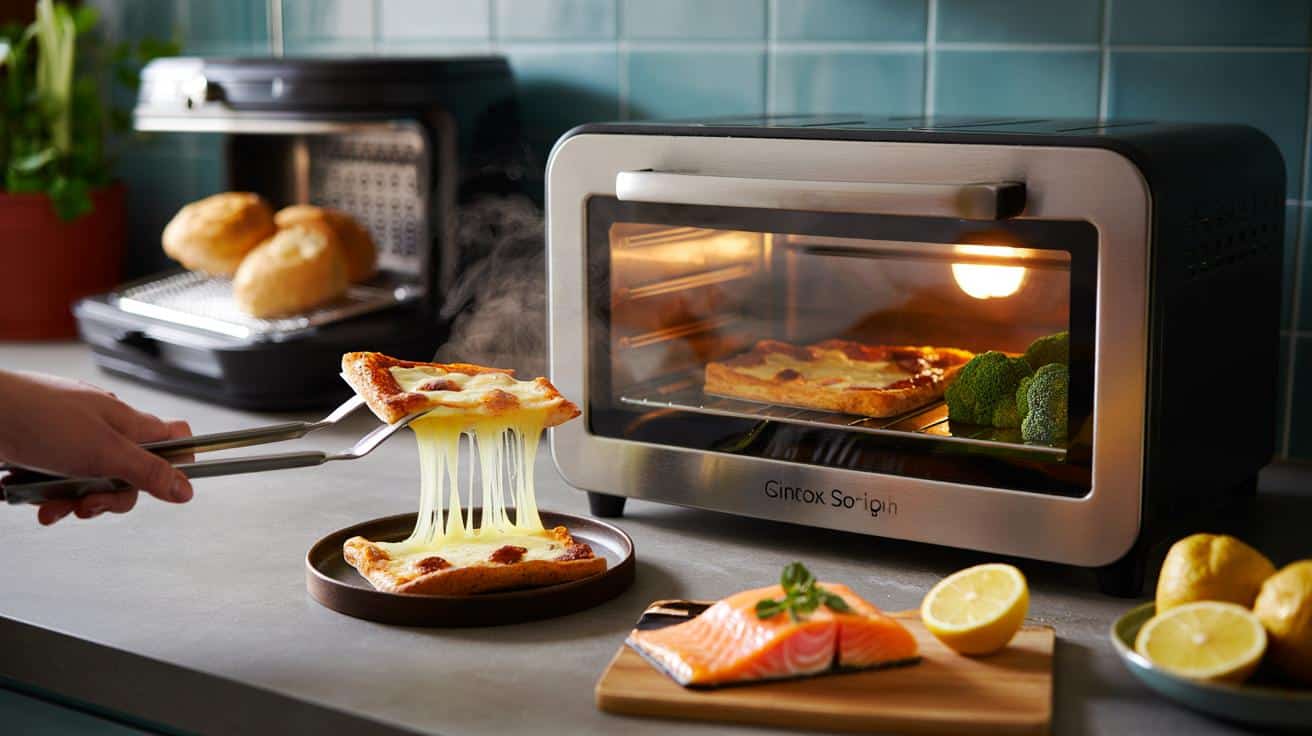
Air fryers had a wild run, but kitchens move on. Across Britain’s countertops, a quiet, steamy little box is taking their spot — and it’s not a microwave, not a toaster, not quite an oven either.
Two minutes later it came out shatter-crisp on top, custardy within, olive oil alive again. The machine hummed, smug but gentle, while her air fryer sulked in the corner, its basket scuffed and its promise a bit tired. She reheated roast chicken without the sawdust texture. She baked salmon that flaked under the fork, not squeaked against it. A lemon stood on the counter, halved, as if the kitchen had just taken a breath.
When bread tastes new twice, you start asking questions.
The comeback of steam: why countertop combi ovens are winning
Steam is creeping back into home cooking, but not the claggy kind you remember from school dinners. This is focused, measured steam in a little cavity where moisture and hot air dance together. The result is food that browns on the outside but stays tender within, recovering life that microwaves flatten and air fryers parch. For 2026, the must-have gadget is the countertop combi steam oven — a toaster-sized box that steams, convects, toasts and sometimes grills in one.
At a Saturday flat-warming in Manchester, the new pride of place wasn’t a cocktail trolley, it was a combi. Guests queued with limp slices of takeaway pizza; two minutes later they were crunching through blistered edges and springy centres. Someone tossed in broccoli, came back to emerald florets, no sulphur, no iffy squeak. The owner laughed that her microwave had become a plant stand and the old air fryer, a backup. On social feeds, you can feel the tide turning: videos of glossy buns and next-day chips that actually taste like chips.
The logic is simple. Air fryers excel at rapid browning, but without moisture they’re unforgiving with lean proteins and leftovers. Microwaves are quick yet uneven, often robbing texture and aroma. A combi steam oven sits in the middle, using moisture to conduct heat effectively, then finishing with a blast of dry air for colour. The cavity is small, so it heats fast and uses less energy than firing up a full-size oven. It’s also tidy: drip tray, cleanable walls, no oily basket to curse at 10 p.m.
How to use a combi steam oven like a pro (without trying too hard)
Start by thinking in two moves: moisture first, colour second. For day-old bread or pastries, run a short steam cycle (30–90 seconds) to rehydrate the crumb, then switch to a hot, dry blast to crisp the crust. For fish, use a lower temp with steam until just opaque, then a quick, high finish to bronze the top. For veg, go full steam for tenderness and colour lock, then a short dry hit for edges. One small ritual helps: pre-warm with steam when reviving leftovers; you’ll taste the difference.
Don’t crowd the tray. The whole point is circulation. Leave finger-width gaps so steam reaches every surface. Pat proteins dry before the colour stage to avoid a dull finish. If you’re reheating rice, break it up with a splash of water, steam lightly, then fluff — no more hard top, soggy bottom. Let’s be honest: nobody actually does that every day. But when you do, it’s transformative. And if you’re the “I’ll wing it” type, use the machine’s presets to learn, then tweak one notch at a time.
We’ve all lived that moment when the takeaway arrives lukewarm and the chips go to cardboard. That’s where a combi is quietly heroic: gentle heat to lift temperature evenly, a kiss of dry air for snap, and supper is saved.
“Steam gives you forgiveness, the fan gives you finish. That’s the sweet spot for real-life cooking.”
- Steam is back — but controlled, not soggy.
- Crisp without dryness — restore texture, keep moisture.
- Weeknight magic — reheat, roast, bake, all in one small box.
Why this shift matters for how we cook now
This isn’t just a gadget swap; it’s a mood change. We’re done with “diet fryer” hacks and ready for food that tastes like itself — juicy chicken, supple veg, bread that crackles again. A combi steam oven slots into modern life: small footprint, fast heat-up, energy-thrifty, kinder to leftovers. It’s more than reheating; it’s rescue work for time and texture.
Brands will come and go, but the principle is sticky: moisture plus moving air equals better flavour in less time. The device invites tiny rituals — a mist before breakfast toast, a gentle steam for late-night noodles — that make home meals feel alive, not compromised. If 2024–2025 was the air fryer’s sprint, 2026 looks like the year we choose control over brute force. Kitchens are getting quieter, gentler, smarter. The question is no longer “How fast can I cook?” It’s “How good will this taste in five minutes?”
| Key point | Detail | Interest for the reader |
|---|---|---|
| Moisture + fan | Steam cooks evenly; convection finishes with colour | Tender insides, crisp outsides, fewer dry disasters |
| Small cavity | Heats quickly and sips energy compared to big ovens | Weeknight speed and lower bills |
| Leftover revival | Rehydrate, then crisp for bakery-fresh textures | Better food without buying more or wasting |
FAQ :
- What exactly is a countertop combi steam oven?It’s a compact appliance that can produce steam and circulate hot air. You can cook with steam alone, dry convection, or a mix that gives both tenderness and browning.
- Is it just a fancy microwave?No. Microwaves heat water molecules directly, which can make textures rubbery. A combi uses steam and airflow, so you get gentler heating and true crusts.
- Will it replace my air fryer?For many everyday jobs, yes. You’ll still get crisp chips and wings, but with less dryness, and you gain superior reheating and baking.
- Is it hard to clean?Most models have smooth interiors and a drip tray. Wipe while warm and empty the water tank; it’s usually quicker than scrubbing an oily basket.
- What should I cook first?Try day-old bread or pizza to feel the “revive” effect, then salmon or veg to taste that moist–crisp balance. After that, brownies or a roast chicken will hook you.







Okay, you got me curious. If this thing can reheat pizza without cardboard crust AND keep salmon from squeeking, I’m in. My air fryer has been loud, dry and… meh lately. Any brand recs under £300? Also, defintely keeping my toaster or no need?