
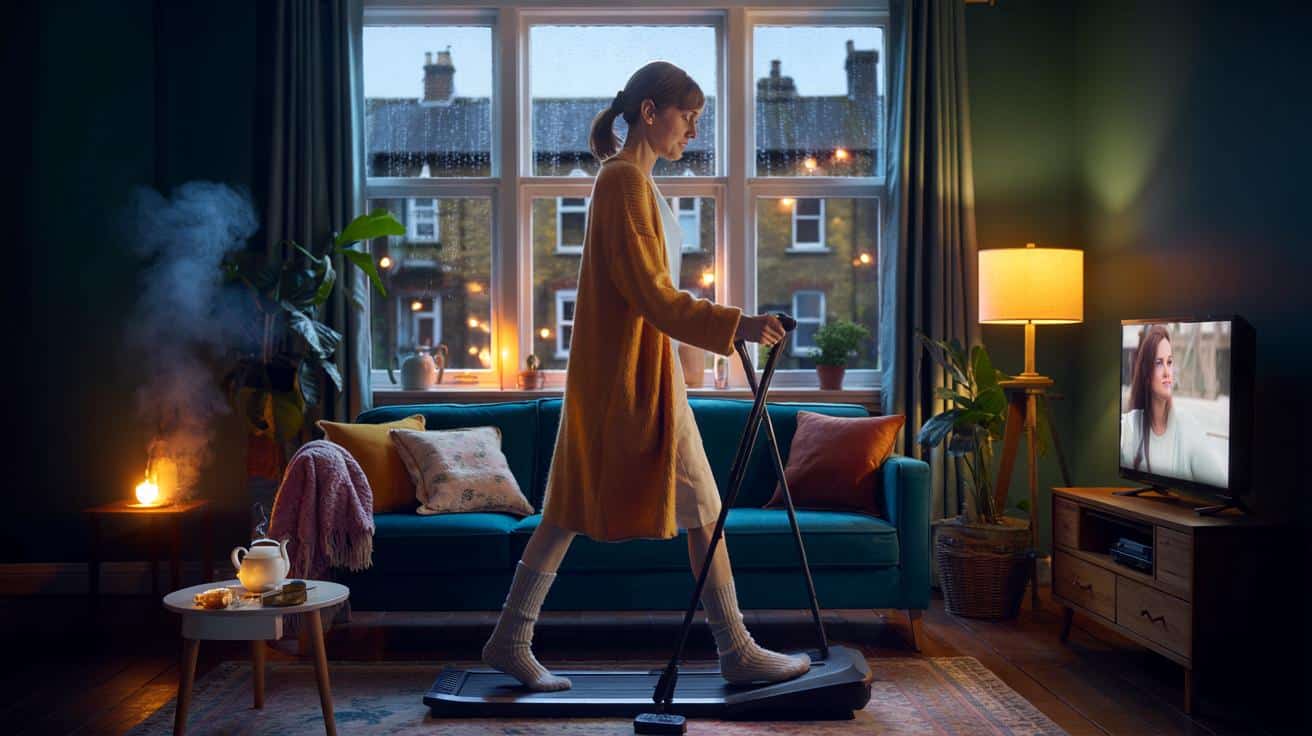
A walking pad hums under a pair of thick socks. Kettle on, sleeves rolled, a favourite show drifts from the telly while a steady, gentle pace gathers on the spot. No sweat angels. No drill-sergeant playlist. Just breath, warmth and a small promise kept before the day begins. Across Britain, this is how thousands are getting their heart rates up without leaving home, and without that familiar knot of dread. It didn’t look like cardio.
From bootcamps to blankets: why cozy cardio caught fire
Britain has endured a strange run of years—cost rises, commute reshuffles, a national bout of tiredness that’s hard to name. A lot of people still want movement, just not the ritual of neon gyms and icy pavements at 6am. Cozy cardio landed like a soft permission slip: light the candle, dim the bulbs, pick a slow soundtrack and keep it low barrier. It fits small flats, rented carpets, and the British weather report. It also respects mood. On dark mornings when motivation collapses, “cosy” does the heavy lifting. That little glow makes “I’ll do ten minutes” feel plausible.
Take Jess, 29, in Leeds—name changed—who bought a second-hand walking pad last winter. She’d bailed on her gym membership after three missed months and a nagging guilt bill. Now she walks twenty-five minutes most evenings, tea steaming on the shelf, cardigan on, phone propped with reruns. Retailers say sales of compact treadmills and steppers surged through cold months, and TikTok clips tagged “cozy cardio” have pulled in millions of views in the UK alone. Google search interest for walking pads and “LISS” keeps climbing. A trend becomes a habit when it solves a daily problem, and this one solves several.
It also slots into a broader shift. Many office workers are now hybrid, claiming back commute time and reworking home routines. Heat costs have made long outdoors sessions less appealing, especially after dark. Low-intensity steady state training (LISS) meets NHS cardio guidance when done regularly, and it’s kinder on sore knees than jump-heavy circuits. Keep the heart rate in zones two to three, and you build endurance without fraying nerves. Cortisol stays calmer, sleep plays nicer, consistency improves. The vibe—soft lighting, familiar scents, unhurried beats—helps the brain say yes. It’s habit psychology by fairy lights.
How to do cozy cardio, the British way
Start with a mini ritual you’ll look forward to. Switch on warm lighting. Put a brew on. Set your walking pad or stepper by the sofa facing something you love—a series, a calming playlist, a radio chat show. Aim for twenty to forty minutes at a pace where you can talk in full sentences. That’s your sustainable sweet spot. On a scale of 1–10 effort, target a 4–6. If you’ve a fitness watch, watch for zone two. No watch? Nose breathing is a good cue. Add a blanket for the cool-down and stretch on the carpet. This is meant to feel kind.
Pick gear that fits your space. A foldable walking pad slides under the bed. A mini stepper parks by a bookshelf. You don’t need expensive candles or new leggings. Use what you have: lamp, jumper, playlist. We’ve all had that moment when the day felt too heavy to tackle anything big. This is your workaround. Keep the path clear to avoid trips, keep a small fan if rooms run warm, crack a window to keep air fresh. Let’s be honest: nobody really does that every day. Aim for most days, and forgive the rest.
Think of cozy cardio as a gentle framework, not a rulebook. Some nights you’ll go slow with a romcom. Others you’ll nudge the incline and watch the rain. Add light dumbbells if you fancy, or hand weights for biceps while you walk. If you’re using a candle or diffuser, place it safely away from curtains and pets, and never on the walking pad housing. Your living room is now your studio, but it still needs common sense.
“Keep your heart rate where you can chat, keep your lighting where you can breathe, and keep your expectations where you can meet them.”
- Starter kit: lamp, mug, walking pad or stepper, soft playlist.
- Target: 20–40 minutes, RPE 4–6, conversation pace.
- Safety: clear floor, stable footwear, sip water nearby.
- Optional: light weights, incline, subtitles to keep pace steady.
- Vibe: one candle is plenty; the ritual is the reward.
What this trend says about Britain now
Cozy cardio isn’t rebellion so much as rebalancing. A nation that idolised early-morning grind culture is gently voting for warmth, pacing and privacy. It’s inclusive: appealing to parents during nap windows, to shift workers, to older adults easing back after a surgery, to anyone who finds music-blasting studios overwhelming. It’s also quietly thrifty. Home setups pay for themselves as gym trips thin out, and even without any gear, a hallway march with a kettle-boil can be your entry point. You might still sprint with a club on Saturdays. You might love a spin studio. That’s fine. Cozy cardio just fills the gaps the British day leaves behind.
| Key point | Detail | Interest for the reader |
|---|---|---|
| Lower barrier, higher consistency | Warm lighting, familiar space, short sessions | Easier to start, easier to repeat |
| Home-friendly kit | Walking pad, mini stepper, no-fuss setup | Works in small flats and shared homes |
| Mind–body benefits | LISS supports heart health and calmer nerves | Energy without the jitters, better sleep |
FAQ :
- What exactly is “cozy cardio”?A low-intensity home workout done in a relaxing setting—soft light, soothing audio, gentle pace—often on a walking pad or stepper.
- Does it “count” as real cardio?Yes, if you keep your heart rate in a moderate zone for 20–40 minutes and do it regularly. It’s still aerobic work, just without the blare.
- How many times a week is ideal?Most people feel good at 4–6 sessions. Mix in a walk outdoors, a bit of strength, or a weekend ride if you like variety.
- Do I need a walking pad?No. You can march in place, use a mini stepper, or walk laps at home during podcasts. The mood is the method; the kit is optional.
- Will it help with weight loss?It can support it when paired with consistent habits and smart nutrition. The real win is adherence—because consistency beats intensity over time.





Love this—finally a fitness trend that doesn’t scream at me. The bit about zone 2 and calmer cortisol explains why I sleep better after easy walks. Definitley keeping the fairy lights.
Isn’t this just rebranded LISS? Not sure adding candles makes it exercise—plz show data beyond TikTok views or retailer sales.