
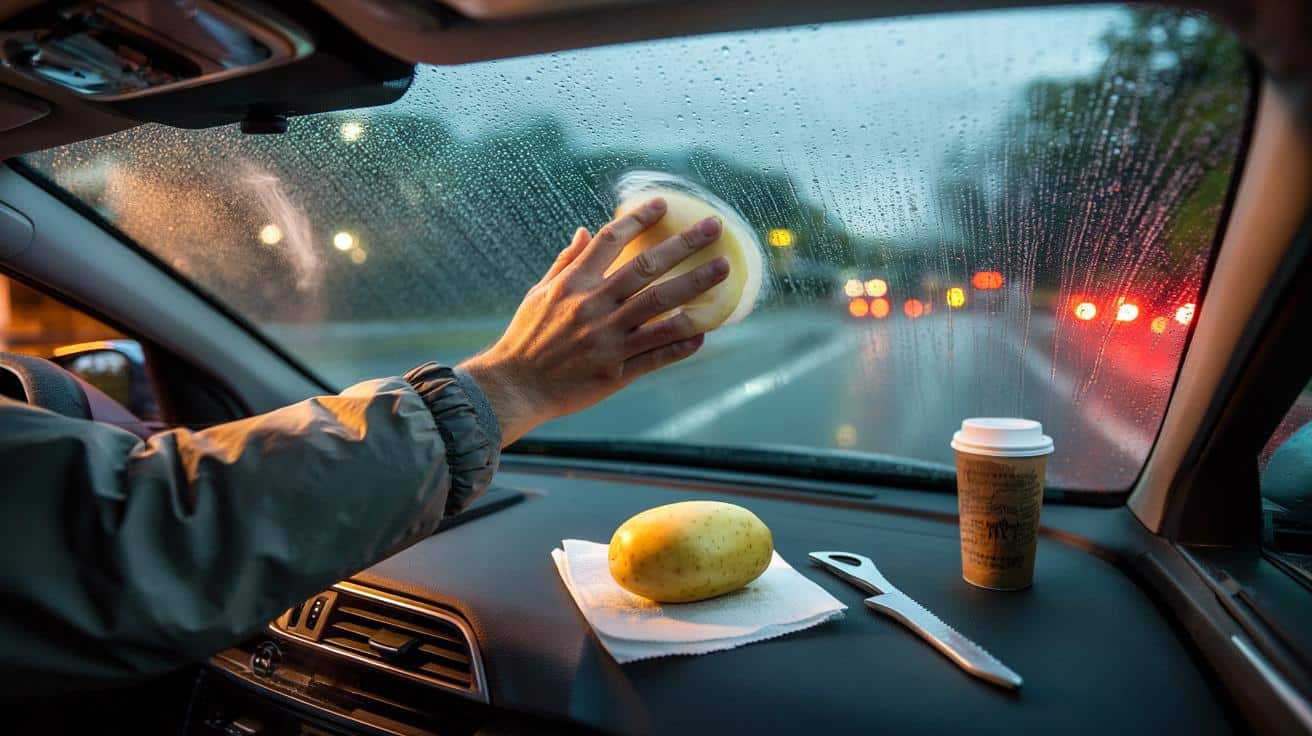
Inside breath meets cold glass, and sight gives up. There’s a cheap fix hiding in the veg drawer — a fix your nan might swear by, and your mates will tease until it saves their commute.
The first time I saw someone rub a potato on a car window, it was still dark enough to mistake the kerb for a puddle. A father on the school run, half-zipped coat, half-drunk coffee, sliced a spud right there on the driveway and swept it over the glass like a magician with a wand. Two minutes later, he glided off with clear panes and a smug wave, leaving me staring at my fogged reflection and the mess of my own breath. It felt like a prank, except the result was undeniable, and suddenly I was wondering why supermarkets sell “anti-fog” sprays for ten times the price of dinner. A potato, of all things.
Why car windows fog up — and why a potato helps
Foggy glass is just physics turning petty. Warm, moist air inside your car hits a cold pane, the air can’t hold as much water, and it dumps tiny droplets right where your eyes need clarity most. It’s worse on damp mornings, short trips, and when you’re carrying wet coats or a soggy dog that shakes off like it owns the place.
I road-tested the potato trick during a week of relentless drizzle, timing how long the demist took on an older hatchback and a newer estate. The hatchback, with a tired heater, would fog up at the first hint of human breathing; with a potato film, the mist softened and slid away faster, never fully blooming into blindness. The estate stayed clearer for longer, especially on the side windows that usually glaze over the moment you stop at the lights.
Why it works is as homely as it sounds. Potatoes hold starches and sugars that leave a whisper-thin film on glass, and that film changes the way water behaves on the surface. Instead of clustering into droplets that scatter your headlamps into milky haze, moisture spreads into a thinner layer that’s less visible and easier to wipe. It’s not witchcraft — it’s surface chemistry you can eat.
How to do the potato anti-fog hack without making a smeary mess
Start with clean, dry glass on the inside. Cut a raw potato in half, pat it on a paper towel, then glide the cut face over the window in overlapping arcs, light pressure, no scrubbing. Let the film dry for a minute and buff gently with a clean microfibre cloth until the glass looks clear — you’re not aiming for shine, just no visible streaks.
A light touch wins. If the cut face looks wet, dab it again before it touches the glass, and avoid the black ceramic frits at the edges where residue clings. Don’t use a salty potato (leftover roasties don’t count), and skip any tinted film you value; test a corner first on older tints. We’ve all had that moment when the heater can’t keep up and the mirror vanishes — this keeps the panic at bay. Let’s be honest: nobody does this every day.
This hack buys you time, not sainthood. The film can attract a bit of dust over a week or two, which means a clean-and-reapply cycle if you want that showroom look. **Think of it like waxing boots before a muddy walk: a small ritual that pays off when the weather turns.**
“It’s the cheapest anti-fog you’ll ever try — and you can cook the rest for tea,” a roadside mechanic told me with a shrug.
- Half a raw potato in a zip bag
- Microfibre cloth (lint-free)
- Mild glass cleaner for prep
- Paper towels for dabbing
- Spare blade or small knife to refresh the cut face
When a spud is genius — and when to pick another tool
On mornings that smell like rain and bus exhaust, this trick feels like a quiet rebellion against glare and guesswork. It’s not a cure for a damp cabin, or a substitute for fixing a clogged pollen filter, or drying out floor mats that squelch underfoot. **It’s a nudge in the right direction, paired best with habits that actually tackle moisture — shoes knocked clean, air-con on for dry air, vents set smartly, and a cracked window when you park after a wet drive.** If you prefer a zero-food option, try a tiny sachet of silica gel under the seat, a purpose-made demister pad, or a pea-sized dot of shaving foam buffed to nothing on the inside of the glass. The potato sits in that same family: humble, cheap, effective enough to make you smile.
| Key point | Detail | Interest for the reader |
|---|---|---|
| Potato film reduces visible fog | Starch leaves a micro-layer that stops droplets beading and scattering light | Clearer vision faster, fewer frantic cloth wipes |
| Application matters | Clean first, apply lightly, let dry, then buff with microfibre | Gets the benefit without smears or hazy patches |
| Know the limits | May attract dust over time; avoid delicate tints; pair with moisture control | Real-world expectations and safer outcomes |
FAQ :
- Does the potato trick damage glass or tints?On bare glass, no. On aftermarket tints or delicate films, test a small corner first and avoid heavy rubbing.
- How long does one application last?Usually a week or two, depending on dust, cleaning, and how damp the cabin gets.
- Can I use something else from the bathroom?Plain shaving foam buffed to invisible works similarly; use a pea-sized amount or you’ll smear.
- Should I still use the heater and A/C?Yes. Warm air plus air-con dries the cabin fastest. The potato layer helps while the system catches up.
- Is a cooking or raw potato best?Raw, unsalted, straight from the cupboard. Cooked or salted spuds leave gunk you don’t want.







Tried this on my foggy hatchback—worked in minutes. Who knew a spud beats the pricey anti-fog spray?
Is this actually safe long term? Any chance the starch film reduces night time visibility or causes glear when it rains?