
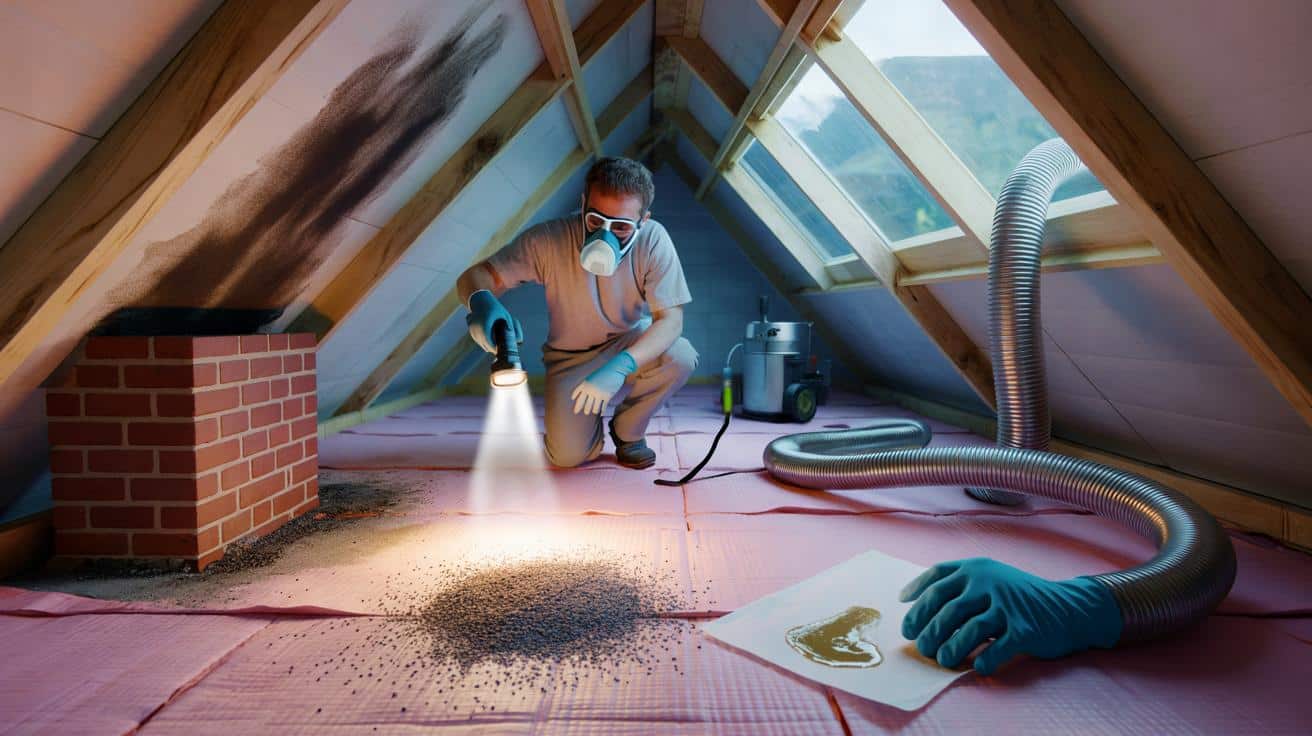
It doesn’t look like much. It’s easy to brush and forget.
I was standing on the loft boards of a terraced house in York when I noticed it first: a faint sprinkle, like someone had tapped an old pencil case over the rafters. The air had that cold, stale loft smell, half timber, half winter breath. I rubbed a bit between my fingers and it streaked my skin, faintly greasy. It looks harmless, yet it tells a story about your home. On the insulation, the dust gathered in little constellations near the chimney stack, and under a bathroom duct that didn’t quite meet its roof vent. Somewhere between neglect and weather, a problem was writing its name in black. Then the loft light flickered.
The ‘black dust’ no one talks about
In so many British lofts, “black dust” is part soot, part ageing roof felt, part damp-loving mould that’s gone flaky under winter air. On timber it reads as smudgy streaks; on insulation it looks like pepper spilled from a height. Near a chimney it may be soot dragged by draughts, while near eaves it’s often tiny crumbs shed from brittle bitumen felt. **Black dust in the loft isn’t just dirt.** It’s evidence — of heat, moisture, wind, and time. Think of it as the quiet ash of a story your house has been telling above your head, where you rarely look.
Here’s a picture you’ll recognise. A couple in Norwich installed a new stove last year and later found black specks gathering like a shadow around the chimney breast in their loft. Their sweep traced it to a tired, unlined flue bleeding soot into the roof void. A builder resealed the crown, lined the flue, and the dust slowed to a whisper. Another homeowner in Cardiff found black granules after last summer’s heatwave; it turned out the old felt had dried out and started to crumble, leaving a dark “snow” over pink insulation batts. Two lofts, same colour dust, very different causes.
Why this happens makes sense once you picture the air in your house. Warm, moist air rises from showers and kettles and finds tiny gaps into the loft, where night air cools it fast. That moisture condenses on the coldest surfaces — rafters and felt — nudging mould into life and loosening brittle tar particles. Soot is a traveller too: pressure differences draw it through hairline joints, even through cracked parging in disused flues. Put ageing materials, winter condensation, and the odd leaky seal together, and you get a sprinkling that looks like nothing. **It’s actually a map.**
How to check — and what to do this weekend
Pick a dry day, grab a torch, a white tissue, and a light mask, and pop up for ten quiet minutes. Start at the hatch, then skim your beam along the insulation, rafters, and around any chimney or soil pipe. Do the tissue test: dab a speck and swipe. If it smears oily black, think soot or bitumen; if it smudges grey-green and smells musty, you’re near mould. If it crumbles dry and gritty, old felt is a suspect. Look for patterns — little drifts under roof nails, streaks beneath a bathroom duct, clusters near the stack. Patterns point to sources.
Go gentle. Loft dust is easy to stir and harder to catch, and dry brushing sends it back into your lungs. A small vacuum with a HEPA filter is your friend, used slowly and close to the surface. Check that bathroom and kitchen fans actually duct to the outside and don’t just end in the loft like a hairdryer in a cupboard. Clear soffit vents from the outside and daylight should kiss the eaves. Let’s be honest: nobody really does that every day. We’ve all had that moment when a house jobs list grows teeth, and the temptation is to shut the hatch and forget. Don’t — future you will thank present you.
If you find the dust, respond to the message, not just the mess. Seal what leaks, move what breathes, and leave the space calmer than you found it.
“Black dust is a message, not a mess. Follow the pattern and you’ll usually find the fix.” — Tom H., chimney sweep of 20 years
- Quick ID: greasy smear near a flue = soot; peppery crumbs under brittle felt = bitumen; fuzzy, smelly patches on cold timber = mould.
- First moves: improve loft airflow, fix leaky ducts, cap or line tired flues, and dry the space before treating stains.
- Safety basics: wear gloves and a P2/P3 mask, use HEPA vacuuming, and bag debris — don’t wet-scrub soot into timber.
The bigger picture above your ceiling
What you see as black dust today can become a damp patch on a bedroom ceiling, a stained chimney breast, or a stale smell that never leaves. When loft air stays wet, timber ages faster and mould finds new corners to colonise, while loose soot can creep through cracks and mark paintwork in mysterious “ghost” shapes. **Small piles of black become big bills when ignored.** Yet this isn’t scare-talk; it’s the odd way houses ask for a weekend of care. One small fix — a proper duct, a cleared soffit, a lined flue, a breathable membrane at re-roof — nudges the whole system back in balance. Share a photo with a neighbour or a trade pro if you’re unsure, because two sets of eyes solve a loft faster than one.
| Key point | Detail | Interest for the reader |
|---|---|---|
| — | Soot-like black dust near a chimney often signals a leaky or unlined flue | Early action avoids staining, odours, and potential fire risks in the roof void |
| — | Crumbly black granules across insulation can be ageing bitumen felt shedding | Explains the mess and guides you towards ventilation or future re-roof choices |
| — | Smudgy, musty patches point to loft condensation feeding mould | Simple airflow fixes and better ducting can calm the space and protect timber |
FAQ :
- What exactly is the “black dust” in my loft?It’s usually one of three things: soot migrating from a working or disused flue, brittle particles from old bitumen roof felt, or mould residue where cold surfaces meet damp air. The location and texture tell the story — smear, crumble, or smell.
- Is it dangerous to breathe?Any fine dust can irritate, especially for people with asthma or allergies. Treat lofts as low-dust zones: wear a P2/P3 mask, ventilate the space while you’re up there, and bag debris instead of brushing it around.
- How do I clean it without making things worse?Work slowly with a HEPA vac and minimal disturbance. Wipe surfaces with a barely damp cloth for soot; let timber dry fully before any treatment. Avoid harsh bleach on wood, which can damage fibres and doesn’t fix the cause.
- When should I call a professional?If the dust clusters around a chimney or stove flue, get a sweep or HETAS-registered pro to inspect. Call a roofer if felt is visibly perishing, and a ventilation specialist if bathroom or kitchen fans aren’t reaching outside.
- Can I prevent black dust from returning?Reduce loft moisture with better airflow at eaves and ridge, fix leaky ducts, and consider a vapour control layer under loft insulation. If re-roofing, ask about breathable membranes and proper flue lining. Small choices now keep the dust from writing the same chapter again.







If the black dust is mostly from ageing felt, does HEPA vacuuming risk pulling more particles loose? Would you reccomend leaving it until a re-roof, or is spot sealing around eaves/ducts actually better in the short term?