
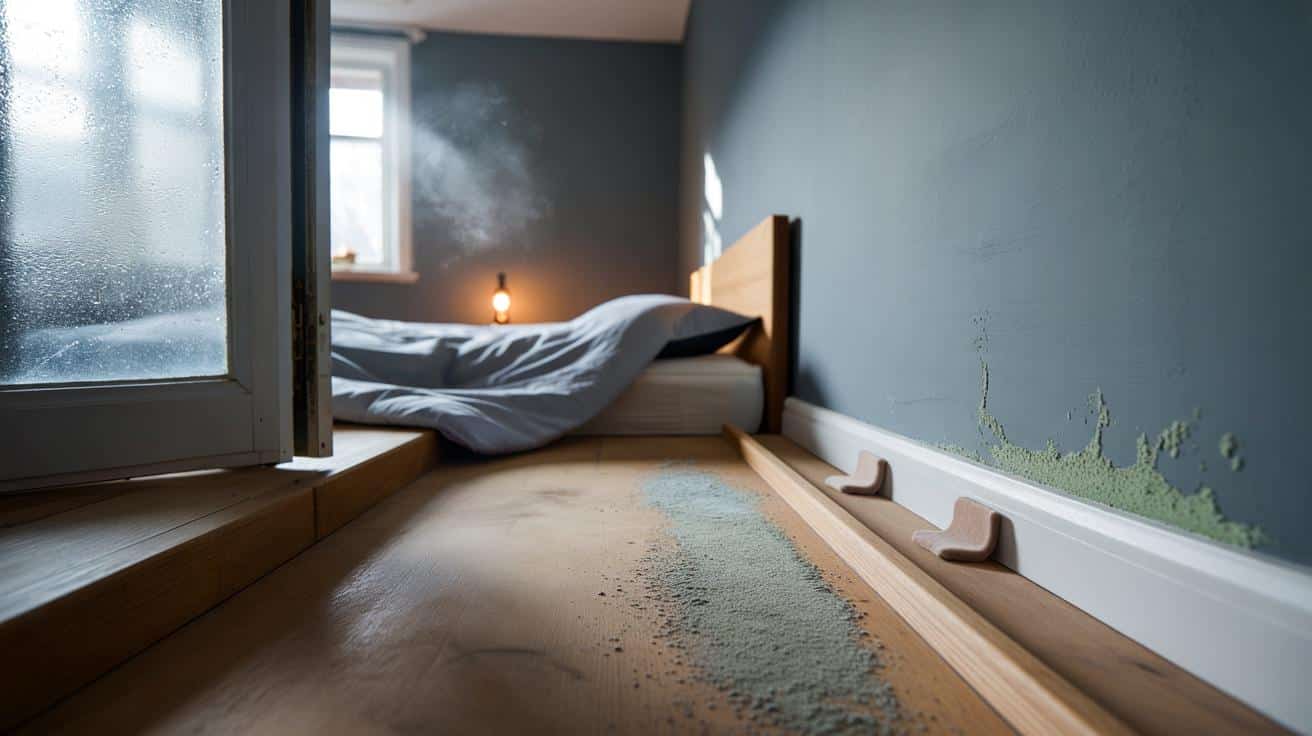
A cold bedroom, a wall that sweats, and a shadow of mould creeping behind your headboard — that’s the winter cocktail many homes know too well. The small, practical move that stops it feels almost silly in its simplicity.
The outside world is frosted, the window glass veined with breath-prints, and I can hear the boiler ticking. I tug the bed forward and there it is: a grey-green bloom on the paint where the wall felt like ice, the kind that makes your chest tighten at the thought of sleeping an inch away.
Sunlight slides in, catching the lint on the skirting board and a line of dust where the bed always sits. I pick at the patch with a tissue and it smears. It’s not a disaster. It’s a warning.
The fix cost nothing.
The five-centimetre fix you can try tonight
Every winter, bedrooms turn into tiny weather systems. You breathe out warm, moist air; the wall is cold; the quilt blocks airflow; the dew point wins. When the bed kisses the wall, you’re creating a little cave where condensation collects and feeds mould.
Move the bed just 5cm away and the air can slide behind it, letting heat brush the wall and moisture drift away. It feels too small to matter. It matters more than you think.
I watched a renter in Peckham drag her double bed forward the width of her thumb and leave it there. She didn’t buy dehumidifiers or paint; she cracked the window after showers and stopped drying jeans on the radiator. Over two weeks, the speckles behind the headboard stayed speckles — no bloom, no spread. We exhale and sweat roughly 200–500ml overnight, per person. Give that moisture somewhere to go.
There’s physics tucked into that tiny gap. Warm air holds moisture; cold surfaces trigger condensation; still air lets it sit. When you create a sliver of space, you invite a lazy loop of movement that warms the wall just enough and keeps the damp from settling. Cold air isn’t the villain; still air is.
How to set up your bed and bedroom to beat mould
Pull the bed 5–7cm from the wall and keep the gap consistent from headboard to foot. Pop felt pads or tiny spacers on the back of the frame so it can’t creep back while you sleep. Lift the duvet so it doesn’t drape down the back and block the air; let that little channel breathe.
Keep the skirting clear of bags, shoes and laundry piles. Leave 2–3cm between furniture and external walls across the room, not just the bed. Open the window a crack after showers and cooking, and run the kitchen or bathroom extract for 15–20 minutes. Let’s be honest: nobody does that every single day. We’ve all had that moment when you spot a black dot and pretend it’s just a scuff. Cold walls don’t care about your floorplan.
Most winter mould fixes are boring routines done on off days, not grand weekend projects. A little consistency beats heroics.
« That five-centimetre gap can be the difference between a breathable wall and a damp trap, » a building surveyor told me on a chilly site visit. « You’re fighting stillness more than weather. »
- Keep indoor humidity near 40–60% with a simple digital hygrometer.
- Dry clothes in one room with the door shut and a window cracked, or use a heated airer.
- Leave wardrobe backs and bookcases 2–3cm off external walls.
- Wipe small spots with white vinegar solution, then dry the area fully.
- Use the trickle vent on modern windows; it’s there for a reason.
The kind of winter home we actually want
There’s a deeper comfort in knowing your room isn’t quietly growing a garden behind your pillow. The small gap is a nudge to rethink winter as a rhythm, not a battle: warm up gently, vent gently, clear the corners, keep air moving in quiet loops. Five centimetres can change the winter life of your bedroom.
Talk to neighbours about what’s worked, because homes repeat mistakes street by street. If your wall is icy to the touch, consider thermal lining paper or a breathable insulating paint when you next decorate, but start with no-spend moves. Open the space, let the wall breathe, and sleep without that nagging worry about what’s growing behind you.
The habit will feel odd for a week. Then it becomes part of the room, as unremarkable as the bedside lamp. Small gaps beat big repairs.
| Key point | Detail | Interest for the reader |
|---|---|---|
| Pull the bed 5cm off the wall | Creates airflow to warm the wall and disperse moisture | Fast, free, and works in rentals without permission |
| Reduce still air around cold surfaces | Avoid draped duvets, packed storage and blocked vents | Lowers condensation risk where mould starts |
| Keep humidity in the 40–60% range | Use a hygrometer, vent after showers, dry clothes smartly | Prevents the nightly moisture build-up behind the headboard |
FAQ :
- How far should I move the bed to stop mould?About 5cm is a solid starting point. If the wall is very cold or north-facing, push to 7–10cm and keep bedding from touching the wall.
- Will a dehumidifier replace the 5cm gap?It helps the whole room, but the microclimate behind your bed still needs airflow. Use both if mould keeps returning.
- Can I just paint over the mouldy patch?Clean and dry it first, then use a stain-blocking primer and a breathable or anti-mould paint. Painting alone won’t solve the trapped moisture.
- My room is tiny — is 5cm really worth it?Yes. That sliver breaks the still air pocket where condensation forms. If space is tight, slide the bed diagonally a touch or swap to a slimmer headboard.
- What else should I move off the wall?Wardrobes, cots, bookcases and chest-of-drawers on external walls. Leave 2–3cm, so air can circulate and the back panels don’t get damp.








Just tried sliding my bed out by a hand’s width last night—woke up without that clammy chill. The “still air is the villain” line finally clicked. I’ll pop felt pads on the frame so it doesn’t creep back. Simple, free, and it actually worked for me.
Is 5cm really enough in a north-facing room with solid brick walls? I’ve had mould even with a gap. Do I need 10cm plus a dehumdifier, or is venting after showers the real game changer?