
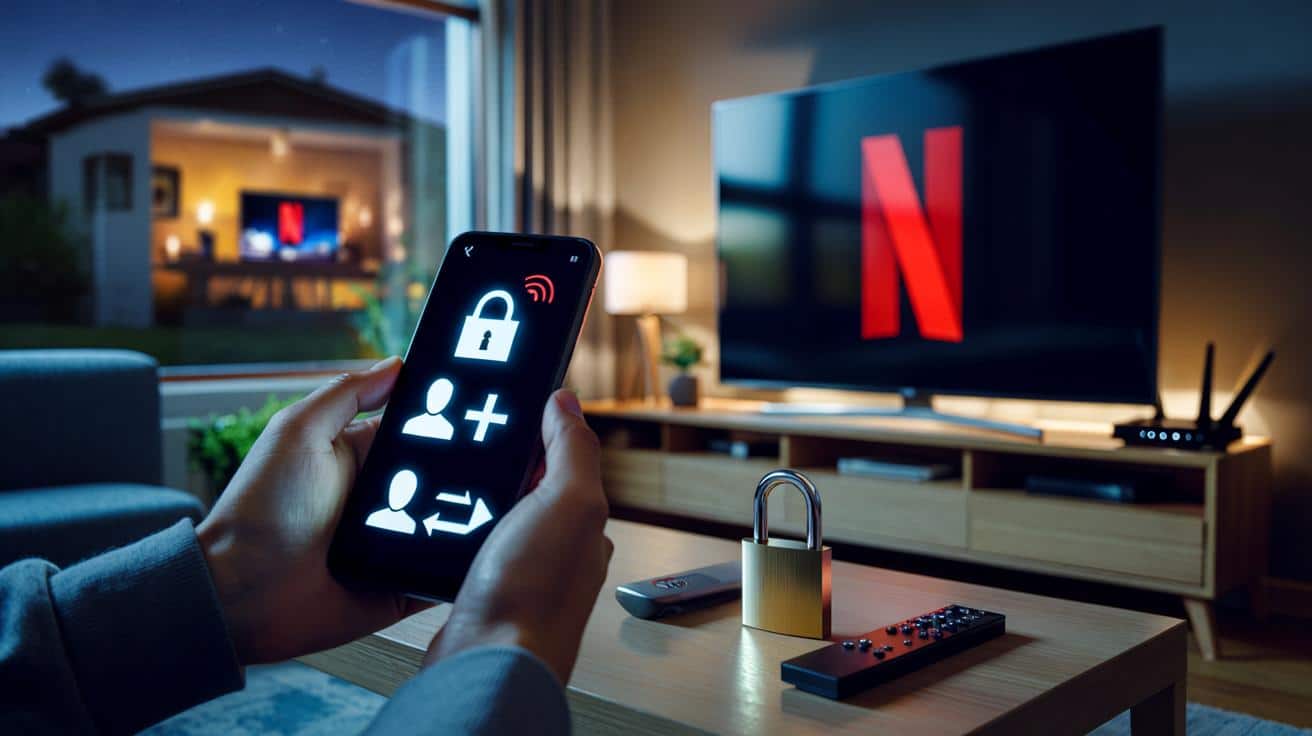
If your account props up multiple sofas, today’s the day to tighten the gates or make new arrangements. We’ve all had that moment when movie night stalls and the screen asks for a code nobody has.
I was halfway through a soggy Saturday roast when my sister texted: “Your Netflix just asked if I live with you?” Her telly in Manchester had flashed a prompt about a “primary location,” then offered to send a code to my email. I refreshed my inbox, gravy cooling, and watched the kind of email subject line that changes long‑standing habits land with a thud: “Let’s confirm your household.”
By the time the roasties were cold, the group chat was trying to divvy up screens like a messy breakup. Who’s paying what. Who keeps access. The dog‑eared password, passed around for years, suddenly felt like contraband. It felt like the end of an era. Then the email landed.
What’s actually changing — and why it’s happening now
Netflix is tightening the definition of “your household.” Put simply, one account is meant for one home, not for a scatter of mates and family across postcodes. The service looks at signals like your home Wi‑Fi, device IDs, and usage patterns to decide if a TV is part of your household or not. That’s why people are seeing prompts to set a primary location and verify devices away from home.
On a real night, this looks like your parents in Kent pressing play on a K‑drama and getting a pop‑up: “This TV isn’t part of your household.” They’re offered a code sent to your email or phone. Maybe they WhatsApp you with a screenshot and a string of question marks. Netflix has said more than 100 million households share accounts, which is a wild figure when you imagine all those living rooms. That scale explains the sudden grit.
There’s a business story under the pop‑ups. Licences are pricier, shows cost more to make, and Wall Street wants growth that isn’t just shiny trailers. Netflix has introduced cheaper, ad‑supported plans in many countries and started offering “extra member” slots on some tiers. It’s nudging freeloaders into paying something, and nudging sharers into tidier boundaries. **The message is blunt: one account, one home.**
What to do today: passwords, settings, and keeping your shows
Start with the basics. Log into netflix.com/account and change your password to a long passphrase — a string of words you’ll remember, not a cryptic jumble you’ll forget. Hit “Sign out of all devices” to wipe old logins, then re‑sign in on the devices that live with you. In the app on your TV, phone or streaming stick, set your “Primary Location” while you’re on your home Wi‑Fi. **Change your password today and clean up the devices list; it takes five minutes.**
If someone needs their own access, use Profile Transfer. It moves their profile — watch list, history, recommendations — to a new account in a couple of taps. That way, the years of late‑night true crime and Spanish thrillers don’t vanish into the ether. There’s also the “extra member” option on Standard and Premium in many countries, which lets you add a person outside your household for a small monthly fee. Prices vary, but in the UK it’s been roughly the cost of a posh coffee each month.
Here’s where people slip. They forget old smart TVs in Airbnbs, borrowed tablets, or that one PlayStation their ex still uses. Use “Manage access and devices” on your account page to spot strangers and boot them out. Let’s be honest: nobody actually does this every day. If you travel often, expect verification codes when you open Netflix away from home, and consider downloading shows in advance for offline nights.
“I knew the day would come,” a mate told me, laughing as he handed back the login he’d used since uni. “I’ll pay for my own now — I just want my ‘Continue Watching’ to come with me.”
- Update your password and sign out of all devices, then re‑sign in at home.
- Set your Primary Location on your main TV or streaming stick.
- Transfer profiles for anyone spinning off to their own account.
- Add an “extra member” if it’s available on your plan and worth the cost.
Travel, second homes, and the little edge cases
Life isn’t neat, and Netflix knows it. If you split time between places, you can still watch — you’ll just see verification prompts more often. Open the app on your primary home network from time to time so your devices stay recognised. If you’re heading abroad, download a bundle of episodes before you fly. It’s old‑school, yes, but your future self on flaky hotel Wi‑Fi will thank you.
Second homes can be trickier. You might need to set the main location at your primary address and accept code prompts at the other. Some households add an extra member for a relative living elsewhere; others decide it’s time for each home to have its own plan. If you’re tempted by a VPN to dodge the rules, know that Netflix’s terms frown on it and streams often fail when detection kicks in. The cat‑and‑mouse is a time sink.
Money is the other edge case nobody loves. If you’re splitting costs with friends, put it in writing on the group chat, pick a deadline, and revisit in three months. **Boundaries make better movie nights.** That tone might sound clinical for telly, but it saves fallouts. And remember: ad‑supported plans exist for a reason — they’re cheaper, the picture is still sharp, and they can be a gentle landing when budgets are tight.
Streaming has always been part technology, part social contract. Password sharing blurred into tradition because it felt harmless — a modern version of lending DVDs. Today’s rules pull that habit back to earth, then offer a few bridges: extra members, profile transfers, cheaper ad tiers. If it stings, you’re not alone. And if you feel oddly relieved to tidy it all up, you’re not alone either. **What you do this week will decide who gets to hit Play in your living room.**
| Key point | Detail | Interest for the reader |
|---|---|---|
| Set your Primary Location | Do it on your main TV while on home Wi‑Fi so Netflix links your household | Reduces annoying verification prompts and keeps movie night smooth |
| Clean your access list | Change password, sign out of all devices, re‑login only on devices at home | Boots freeloaders and protects your account from silent hangers‑on |
| Choose your sharing path | Use Profile Transfer or add an extra member; pricing varies by country | Keeps watch history intact and avoids awkward “who pays?” arguments |
FAQ :
- What counts as a “household” on Netflix?People who live with you at your primary address and use devices connected to your home internet. Devices outside that home may need verification or their own membership.
- Will I lose my watch list if I start my own account?No — use Profile Transfer to move your profile, recommendations, My List, and viewing history to a new account with a couple of clicks.
- How often do devices need to connect at home?There’s no public clock to the minute, but streaming from your primary location periodically helps keep devices recognised and reduces verification prompts.
- Can I use a VPN to keep sharing?You can try, but streams often fail when detection kicks in and it may violate Netflix’s terms. It’s usually less hassle to pick a plan that fits.
- How much is an “extra member” in the UK?Netflix has priced it around £4.99 per month on eligible plans, though availability and costs can change. Check your Account page for current options.







So if I split time between two homes, do I need to verify every single week, or is there a smarter way? Any tips for travellers besides downloads?