
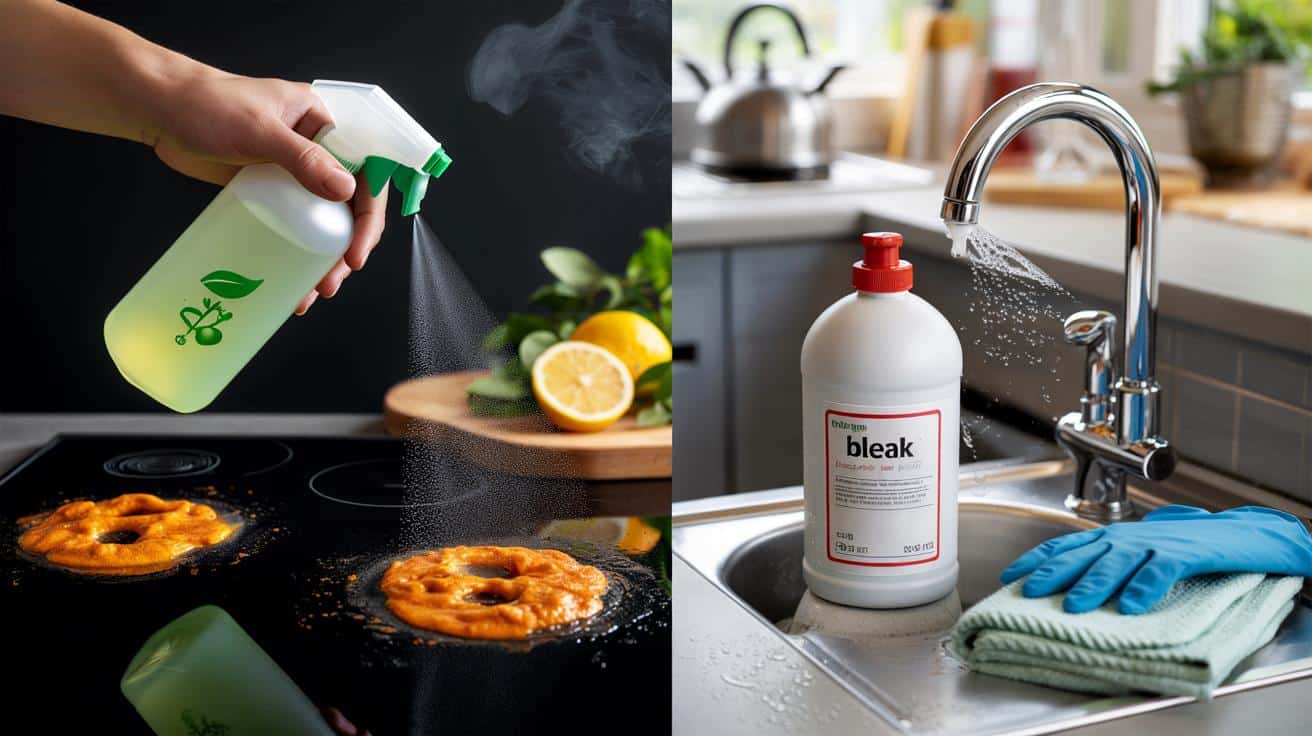
Across Britain, a whisper has turned into a roar: an 80p plant‑based cleaner that fans say beats bleach on grime, smell and even germs. Supermarket shelves tell the story, too — the cheap green bottle sells out on wet Saturdays, the way crumpets go before a storm. What’s true, what’s hype, and what actually gets your sink, loo and lunchbox safe‑clean?
A sticky hob after late‑night pasta, a white sink tattooed with tea. A friend plonked down a small, no‑frills spray with “plant‑derived” on the label, then grinned at my old, blunt bottle of bleach like we’d brought knives to a bake‑off. My nose noticed before my eyes did. Citrus, not chlorine. Steam from the kettle hung in the air as we cleaned side by side, swapping cloths and small bets. The verdict wasn’t what I expected. Not at all.
What we call “clean” can be two different jobs
Here’s the first twist: cleaning and disinfecting aren’t the same thing. Food residues, soap scum, limescale — that’s soil you have to lift and remove. Killing microbes is a separate step that depends on concentration and time on the surface. **Bleach disinfects; it doesn’t clean.** Many plant‑based formulas do the reverse brilliantly, lifting grease and scale so the surface looks and feels fresh. That split explains a lot of the arguments happening on TikTok and at the school gates.
We’ve all had that moment when you wipe a worktop and it looks brand new, yet you still worry about last night’s chicken. In our kitchen test, the 80p spray melted the hob’s orange spatters in two passes and took the tea stains from the sink without drama. Bleach didn’t shift the baked‑on stuff, but when we used it after a soap wash, it blitzed the funky smell in the plughole. Two roles, one surface, same evening. The penny started to drop.
On paper, the difference is chemistry. Budget “green” sprays tend to use plant‑derived surfactants from coconut or sugar, plus acids like citric or lactic to cut limescale and lower pH. That makes them great at detaching dirt and mineral film. Bleach is sodium hypochlorite in water, alkaline and oxidising, brilliant at broad‑spectrum disinfection when left on the surface long enough. The bolder claims on either side hinge on that clock: contact time. If you wipe too soon, you’re not getting what the label promises.
How to get the most from an 80p plant-based cleaner
Think layers. Start by removing crumbs, grease and visible soil with warm water and your plant‑based spray. Give it 3–5 minutes to work — that’s when the surfactants loosen the mess and the acids do their quiet lifting. Wipe with a damp microfibre, then dry with another. On taps, kettles and shower screens, a second, short spray can polish and defog. The cheap stuff shines here, literally.
For disinfection, timing and product choice matter more than the logo. If your plant‑based bottle lists lactic acid or cites standards like EN 1276 or EN 14476, it may kill common bacteria or certain viruses when left on the surface for the full stated minutes. Let’s be honest: nobody does that every day. Life is school runs and spaghetti. On high‑risk moments — raw chicken spills, tummy bugs, bins — reach for a proven disinfectant or a tested plant‑based sanitiser and actually wait it out.
Big no‑no: mixing. **Never mix plant acids or vinegar with bleach—ever.** That combo releases chlorine gas, which can hospitalise you faster than a dirty sponge ever could. Ventilate, read the back label, and pick one route per job.
“The right product is the one that matches the risk,” says a hospital microbiologist I spoke with. “Clean first, then disinfect if you need to — and give it the minutes it asks for.”
- Use plant‑based on: grease, fingerprints, limescale film, food splashes.
- Disinfect separately after: raw meat prep, pet accidents, tummy bug outbreaks.
- Patch‑test on stone and unfinished wood; acids can etch marble and limestone.
- Microfibre beats paper for lifting dirt. Wash cloths hot, then air‑dry fully.
- Keep products simple. One cleaner, one disinfectant, clear roles.
So, is it really better than bleach?
The honest answer sits in your hands, not on the label. Plant‑based cleaners earn their keep on the jobs you face daily: greasy hobs, fingerprinted fridges, kettle dribble, bathroom sheen. They smell nicer, cost pennies, and turn a wipe into a small, smug victory. Bleach steps in when risk rises — norovirus going round school, raw chicken juice sneaking under the chopping board, mould in shower grout. **For raw chicken spills or norovirus season, stick with a proper disinfectant.** You don’t need it everywhere, every day. You do need it when it counts. That’s the truce your cupboard can live with.
| Key point | Detail | Interest for the reader |
|---|---|---|
| Cleaning vs disinfecting | Plant‑based lifts dirt; bleach kills microbes with contact time | Know when the 80p spray wins and when to escalate |
| Contact time rules | Labels list minutes and standards (EN 1276, EN 14476) | Better results without buying pricier products |
| Safety and surfaces | Never mix with bleach; avoid acids on marble/limestone | Keep lungs, countertops and wallet happy |
FAQ :
- Does an 80p plant‑based cleaner kill viruses?Some do for specific viruses if they use actives like lactic acid and pass EN 14476. Check the back label for the standard and contact time; if it’s not there, treat it as a cleaner, not a disinfectant.
- Is bleach still the fastest way to disinfect?On hard, non‑porous surfaces, diluted household bleach can inactivate a wide range of microbes quickly when left for the full stated minutes. It won’t cut grease by itself, so clean first.
- Can I clean everything with plant‑based products?They’re great on most sealed worktops, stainless steel, glass and tiles. Avoid natural stone like marble and some unsealed woods, where acids can etch or dull the finish.
- What about mould in the bathroom?Plant‑based cleaners can remove soap film and help prevent build‑up. For visible mould staining or musty grout, use a mould‑specific product or a disinfectant that lists mould control and follow the dwell time.
- Is the 80p bottle really cheaper long‑term?Often, yes. You use more for degreasing and less for daily spritzes, but per clean it stays low. Pair it with a single proven disinfectant for high‑risk jobs and you’ve covered nearly every scenario without a cluttered cupboard.





Really appreciate the clear split between cleaning and disinfecting here. Too many of us spray, wipe, and assume the job’s done. If the 80p bottle lists EN 1276/EN 14476 and we actually respect contact time, I can see it replacing pricier stuff for daily mess. For raw chicken nights, bleach or a proven sanitiser still seems wiser. Practical, not preachy—thanks for that.