
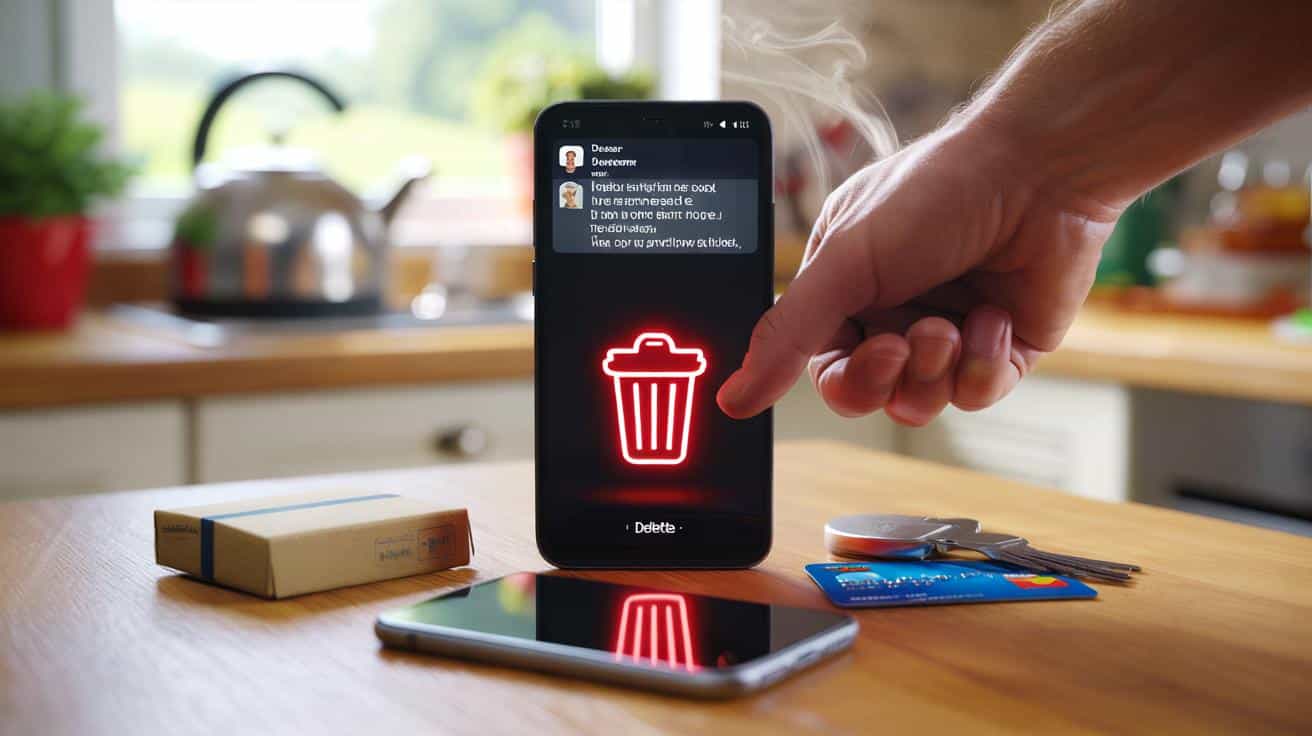
“DPD: your parcel needs re-delivery. Pay £1.79 here.” Clean logo. Neat link. The timing feels right because you ordered something last night. That’s the trap. The fake DPD text is riding the same routines that keep us moving — parcels, pings, quick taps. One hurried thumb and you’ve handed over your card, your address, your calm. The smartest move is also the simplest: delete it instantly.
The kettle clicks off. Your phone lights up on the counter. A DPD message flashes into focus, promising to drop your parcel today if you “complete a small fee.” You picture the box, the bubble wrap, the zing of opening something new. Two taps later, the screen asks for your card details and a date of birth. You pause, but not for long. The clock nags, your lunch is getting cold, and there’s a meeting in ten minutes. You enter the numbers and move on. Minutes later, your bank calls. Something doesn’t add up.
The DPD text that isn’t from DPD
Scammers copy the rhythm of real life. They lean on the familiar names — DPD, Royal Mail, Evri — and mimic the tidy tone you expect. They pitch small fees that feel harmless, and they send just as you’re expecting a parcel. That blend of plausibility and timing is their edge. It isn’t your fault for feeling the pull. We live by our notifications now.
Here’s a small story from a reader in Leeds who asked me not to use her real name. “Anna” clicked a link on her commute, thinking it was a reschedule page. The site wore DPD’s colours like a snug coat. She entered her details, then got a call “from her bank” within the hour, urging her to move money to a “safe account.” She caught the con only when the caller tripped over her middle name. The money was saved, but the week was wrecked.
This scam works because it’s stitched together from several tricks. The sender name can be spoofed, so the text might even slip into a real thread of past DPD messages. The link often uses a short domain that hides a fake site, designed to harvest card numbers and addresses. There’s often a second act too — a voice call that uses the details you just typed to sound convincing. **Genuine couriers will never text you to pay a random fee via a shortened link.** Real delivery changes live inside the official app or your original order confirmation, not a mystery SMS.
What to do the second it lands
Start with the blunt move. **Delete it. Do not tap the link.** If curiosity bites, long-press the link to preview the full URL without opening it. A real DPD domain won’t be a mishmash of letters or a dot-xyz. If you’re expecting a parcel, open the DPD app or your retailer’s order page yourself. That tiny detour keeps you in control.
Report the text by forwarding it to 7726 — a free service on all major UK networks. It feeds the number to systems that help block future waves. Then block the sender on your phone, even if it looks like a familiar thread. If you did tap and enter details, contact your bank from the number on the back of your card and freeze or replace it. Don’t wait for “proof.” Let the professionals take it from there. Let’s be honest: nobody checks every URL with forensic care on a busy Tuesday.
We’ve all had that moment when a tiny fee feels easier than the hassle of missing a delivery. That’s why a quick, personal checklist helps when your brain is rushing.
“If a message makes you hurry, pause. Urgency is the con.”
- Open the DPD app or your retailer’s website directly — never via the text.
- Look for odd spelling, strange punctuation, or tense errors in the SMS.
- Check the link preview. Real brands don’t hide behind shorteners.
- Use a card with strong alerts enabled for any online purchase.
- Report the scam by forwarding the text to 7726 — it takes seconds.
Don’t just dodge it — outsmart it
If a DPD text asks for bank details or a “redelivery fee,” treat it as theatre. Open your orders, not your messages. Cross-check tracking numbers inside the DPD app, which pulls data from the real system. When in doubt, call DPD using the number on their official website. One clean habit beats a dozen warnings.
Common slip-ups make this scam snowball. People think a tiny £1-£3 charge can’t hurt, then it snowballs into a call from a fake “fraud team.” Others rely on the sender name as proof, not realising it can be faked. Some screen-grab the page to “check later,” then forget. Be kind to yourself if you clicked — shame is the fraudster’s favourite tool. Breathe, reset, and act fast with your bank.
If you did type details, change passwords for any account that shares that email and consider enabling passkeys or two-factor authentication. Watch for fresh texts that reference the same parcel; it’s often a cluster, not a one-off. *Trust your pause more than your thumb.* If a courier really needs you, they’ll find a way that doesn’t demand a fee through a random link.
Every dodged scam is a small public service. Tell your group chat what the fake DPD text looks like this week. Screenshot the dodgy link and post it in the family WhatsApp with a short note. Ask your building’s reception to pin a one-line reminder where parcels stack up. The more ordinary this caution becomes, the fewer people will lose a payday to a polished con. Your story might be the reason someone else doesn’t tap today.
| Key point | Detail | Interest for the reader |
|---|---|---|
| Red flags in “DPD” texts | Shortened links, fees via SMS, odd grammar, pushy timing | Spot the fake in seconds and save your card |
| Safe next steps | Delete, report to 7726, check the DPD app or retailer account | Practical moves that work on any phone |
| If you clicked | Call your bank from the card number, freeze card, change passwords | Contain damage fast and get your money protected |
FAQ :
- Does DPD ever send real texts?Yes. They might send delivery windows or updates, but they won’t ask for card details or fees via a random link. Go through the app or your original order.
- How do I report a scam text?Forward it to 7726 (spells “SPAM” on a keypad). It’s free on major UK networks and helps block future waves.
- I paid a small fee — what now?Call your bank from the number on your card, explain it was a phishing text, and request a card replacement and a refund review. Then monitor your statements.
- Can just opening the text infect my phone?Receiving a text isn’t the risk. Trouble starts when you tap links or install anything. Don’t download apps or profiles you didn’t seek out.
- How can I verify a delivery safely?Open the DPD app, use your retailer’s order page, or type the courier’s website address yourself. Avoid links in unsolicited messages.







Is forwarding to 7726 actually doing anything? I’ve reported dozens and still get them.