
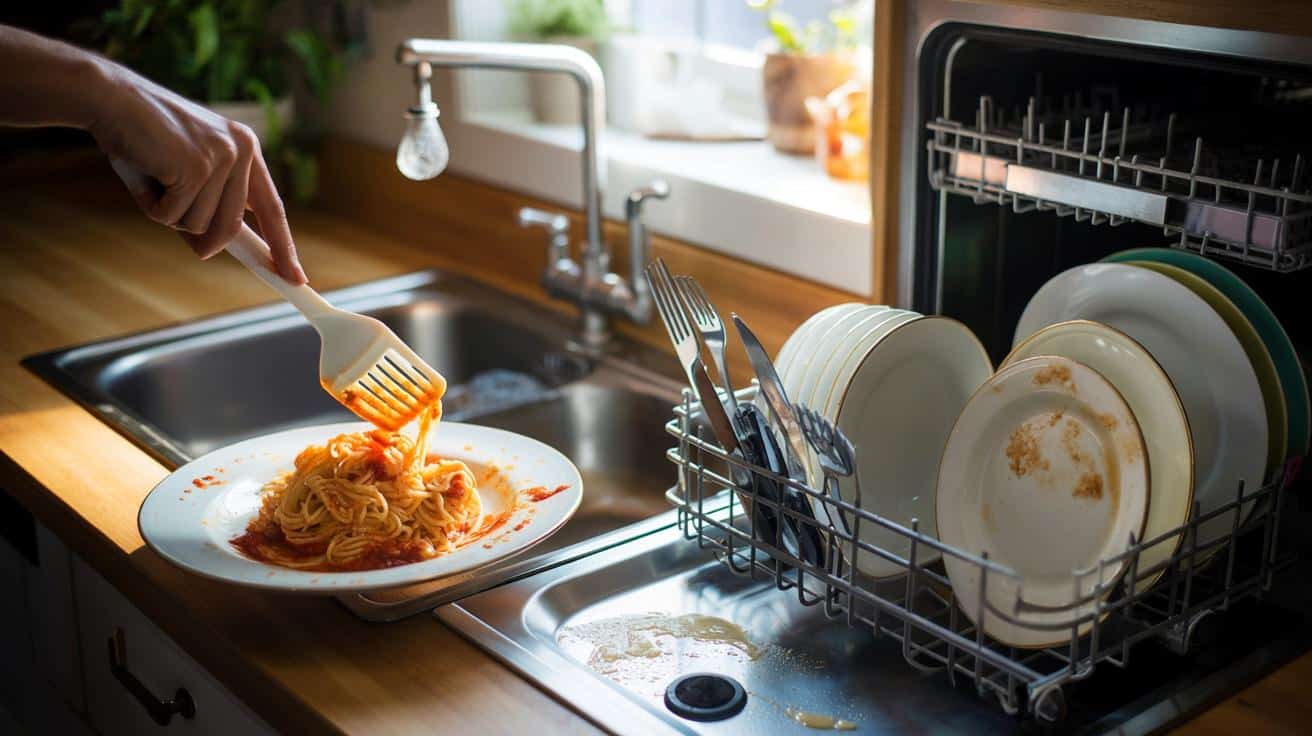
It feels polite, even virtuous. It also torpedoes the very thing you paid for.
The neighbour’s kitchen window is cracked open, steam fogging the glass. Plates clink. A woman leans over the sink, rinsing every bowl as if the tap were anointing them, then slots them into the machine like she’s laying tiles. I’ve seen the same drill at house parties, in flatshares, at my aunt’s after Sunday roast. The ritual looks right. It smells clean. It steals minutes we don’t have.
Then someone presses start and the dishwasher swallows our effort without thanks. And here’s the twist that unsettles the whole habit: modern machines want dirty dishes. Not filthy, not crusted, but genuinely dirty. The dirt is data.
The case against the pre-rinse
Stand in a kitchen long enough and you see how habits stick. People rinse because their parents rinsed. Because an old machine once left spinach welded to a fork. Because the tap is right there, warm and ready. The thing is, today’s dishwashers are cleverer than our rituals. They use soil sensors, targeted spray patterns and enzyme detergents that are designed to latch onto food. When you strip away the grime, you sabotage the chemistry.
Take a normal weeknight. You scrape plates, then let the tap run while you “just knock the bits off.” In two minutes, you’ve sent litres of hot water down the drain. Double it for big meals. Multiply by days. It adds up. Data from water providers show a kitchen tap can pour six litres a minute. Four minutes of pre-rinsing? That’s 24 litres gone before the cycle even begins—often more water than an efficient programme uses for the entire wash. The maths is as stark as the sink.
Here’s the quiet truth most people miss. Enzyme detergents are activated by proteins and starches. They need something to bite. If the plates go in squeaky, sensors read “not much to clean” and shorten the cycle. You end up with that annoying tea film or a whisper of grease. Worse, too little soil can leave detergent looking for work, so it lingers and clouds glass. The system is built for a small, honest mess. It’s not laziness; it’s trust in the machine.
Do this instead: the smart load that actually cleans
Think scrape, not rinse. Use a silicone spatula or a fork to nudge leftovers into the bin or compost, then load without turning the tap. Plates face the centre, bowls angled down and in, pans on the sides so the spray can sweep across. Keep a finger’s width between items. Plastics on the top rack. Knives handle-up for safety. Choose the eco programme for everyday, and let rinse aid do the drying lift. Add dishwasher salt if you live in a hard-water area. That’s the whole play.
Common snags creep in when you’re tired or rushing. Overloading is the big one. It feels efficient to stack one more bowl, then another. You end up blocking the spray arms and shadowing the detergent. Spoons spoon. Glasses nest. Then there’s the temptation to press “Intensive” for everything. It can etch glass and waste energy for no gain. We’ve all had that moment when the machine smells off—usually a clogged filter asking for a two-minute clean. Let’s be honest: nobody does that every day.
There’s a simple rhythm to keeping it painless and effective. Run pans with baked-on sauces on the lower rack at an angle. Tricky casseroles? Soak in the dish itself for 20 minutes while you eat, not under the tap, then straight into the machine. Reserve the quick programme for lightly soiled breakfast things. And once a month, give the machine a maintenance cycle with a cleaner or a cup of white vinegar on the top rack to chase odours and limescale.
“Dishwashers aren’t tiny sinks. They’re controlled storms. Give them something to work with.”
- Scrape, don’t rinse: food to bin or compost, then load.
- Space matters: a finger’s width between plates and bowls.
- Angle inwards: faces to the spray, not to each other.
- Use eco: modern programmes save water and hit the right temps.
- Clean the filter weekly: 90 seconds, no tools, no drama.
- Top up rinse aid and salt: clearer glass, faster dry.
What you save when you stop rinsing
Time first. A family of four can spend five to ten minutes a meal performing the pre-rinse shuffle. That’s an hour or more a week you could turn into a walk, a chapter, a game on the floor with a toddler. Water next. Efficient dishwashers sip nine to 12 litres per cycle. A pre-rinse under a running tap often gulps twice that. Your energy bill falls because your boiler isn’t heating all that wasted water. Your glasses last longer because they’re not getting etched by detergent that didn’t have a job.
There’s also a quiet joy in letting a tool do its job. You’ll see it the first time you scrape and load after a roast, resist the tap, and everything emerges clear, hot and dry. The sensor noticed the gravy, ran a longer wash, and rinsed harder at the end. Aluminium trays didn’t go black because they weren’t scrubbed weirdly at the sink. Wooden spoons stayed out of the sauna. Even the tea mugs lost that ghostly tan without a pre-flush. It’s a small domestic win that tastes bigger than it looks.
Some people worry about smells or bugs if plates sit for a few hours. Reasonable fear, wrong fix. Keep the door ajar to vent, run a quick rinse-only programme if it’ll be a day or two, and clean the filter on Sundays. That’s it. If you’re in a very soft-water area, switch to powder so you can dial the dose down—pods can be too punchy and leave residue when soil is light. If you’re battling hard water, salt and rinse aid do the heavy lifting. A dash of pragmatism beats a chorus of taps every time.
| Key point | Detail | Interest for the reader |
|---|---|---|
| Stop the pre-rinse habit | Scrape solids, load dirty, let sensors and enzymes work | Cleaner results with less faff and less water |
| Load with intention | Face items inward, space them, keep plastics top rack | Fewer streaks, no rewashes, faster unloads |
| Maintain lightly, not obsessively | Weekly filter clean, monthly hot maintenance cycle | Fresh machine, no odours, longer appliance life |
FAQ :
- Should I ever pre-rinse at the tap?Skip it. Scrape instead. Modern detergents need a bit of food soil to “grab” so they can break it down.
- What about baked-on trays and lasagne dishes?Soak in the dish for 15–20 minutes while you eat, then load. Use the intensive programme for that load, not the tap.
- My glasses keep going cloudy. What fixes it?Add rinse aid and check salt. If you live in soft water, switch to powder and use less; avoid constant high-heat cycles.
- Is a pre-wash programme worth it?Use a machine’s short rinse-only cycle if plates will sit overnight. It uses a trickle of water, far less than a tap session.
- Why does my dishwasher smell?Usually a dirty filter or trapped bits in spray arms. Clean the filter weekly, run a hot maintenance wash monthly, and leave the door ajar between runs.




Ok, thanks for the nudge. I tried a full load last night—no pre-rinse, just a scrape—and everything came out spotless. The “dirt is data” bit finally clicked. Guess I’ve been paying for sensors I kept sabotaging. Consider my tap offically on a diet.
Honest question: if plates sit 24–36 hours, does “door ajar + quick rinse” really stop smells? We cook a lot of fish, and I’m woried about funk and bugs. Any data on bacterial growth vs a brief pre-rinse? Not trying to be snarky, just cautious.