
” The valet van is booked solid, the forecourt kits feel wasteful, and yet the crumbs, fog and stale coffee smell keep tapping your shoulder. What if the fix isn’t in the garage at all, but behind the bathroom mirror?
Saturday morning, lukewarm tea on the roof of the car, I stared through a windscreen filmed with life: finger smears, last night’s rain, the faint haze that never quite wipes off. On the back seat, a fossilised crisp sat like a small confession, and the headlight lenses wore that tired, yellowish cloud that makes any car look older than it is. I opened the boot, found nothing inspiring, then wandered upstairs to brush my teeth and saw it differently. The cabinet was a toolbox in disguise. It was the sort of mess that makes you consider buying a bicycle. And then I spotted the toothpaste.
Why your bathroom doubles as a detailing kit
Most of what makes a car look grubby isn’t heavy dirt; it’s film, odour and oxidation. Bathroom staples happen to be built to tackle exactly that: surfactants that lift oil, gentle abrasives that polish, alcohols that cut residue. The labels talk about smiles and smooth shaves, but the chemistry sings the same tune your local detailer hums.
A friend showed me the trick that changed how I clean: a white blob of shaving foam on a curry spill, worked in with a soft brush, then blotted away until the scent vanished like a story told twice. Another neighbour swears by a dab of plain toothpaste on hazy headlights before the MOT, and his old Focus genuinely looked less sleepy in five minutes. Tiny efforts, big morale boost.
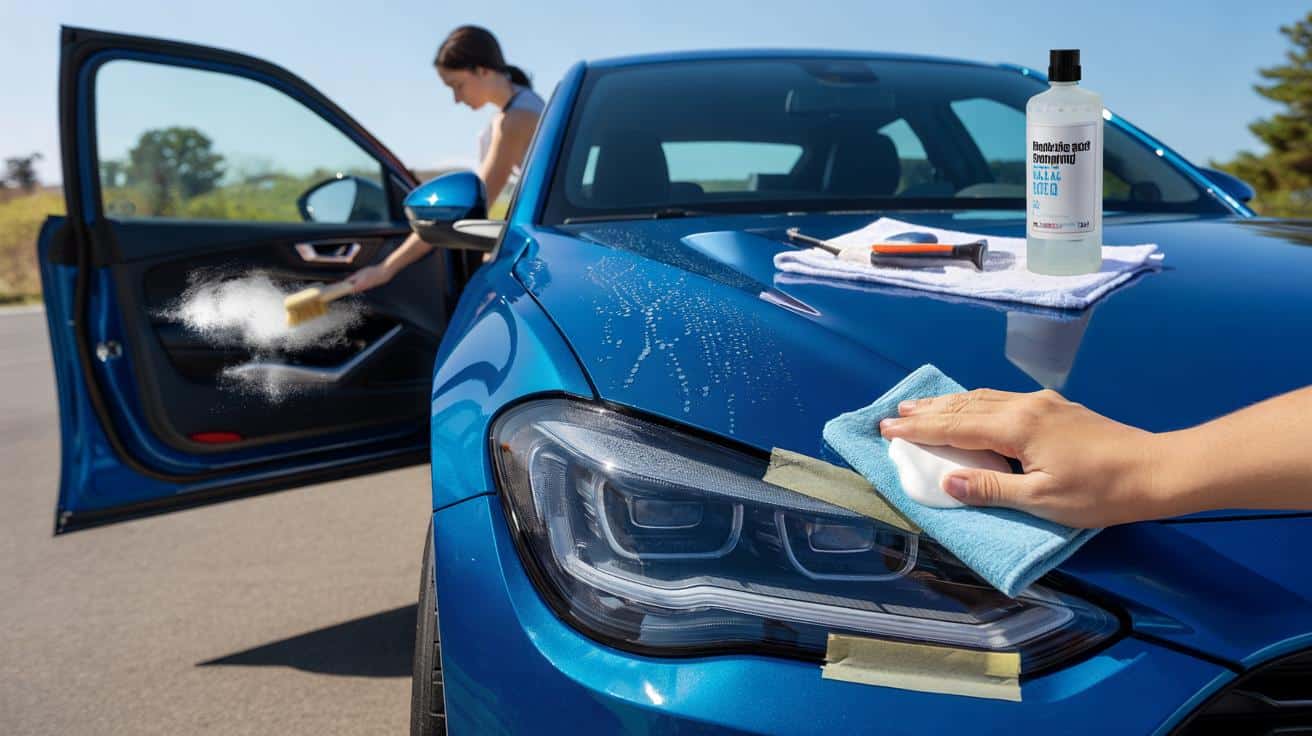
Here’s the quiet logic. Toothpaste contains fine polishing agents that gently abrade oxidation off clear plastic, turning dull lenses clearer so more light actually gets out. Shaving foam is a foamed detergent with odour-neutralising compounds, so it lifts body oils, food spills and the ghost of last week’s takeaway from fabric seats. Isopropyl alcohol evaporates fast and cuts through the inside windscreen film created by plastics off-gassing and handprints, leaving glass squeak-clean when used sparingly. Test any hack on a hidden patch before you go all‑in. Paint, tint films and delicate trims don’t love surprises.
Toothpaste headlights, shaving-foam seats, and rubbing alcohol clarity
For cloudy headlights, wash the lenses first with warm water and a drop of mild shampoo, then mask the paint around them with low-tack tape; work a pea-sized blob of plain white toothpaste on a damp microfibre in small circles for two to three minutes per lens, misting with water as it dries and wiping clean before repeating lightly. Rinse, dry, and, if you have it, add a dab of wax or UV sealant to keep them clearer for longer; don’t lean in with power tools or sandpaper unless you know what you’re doing. Use plain, non‑gel toothpaste for this; whitening, charcoal or microbead pastes are too scratchy or messy.
On fabric seats and carpets, spritz the spot with a little water, then lay down a thin veil of white shaving foam and work it in with a soft brush, keeping your motions small so you don’t spread the stain; blot with a clean towel until the foam lifts the muck and the towel comes away almost clean, then dab with fresh water and blot again to remove any residue before you let it dry. We’ve all had that moment when a rogue latte turns a commute into a souvenir, and the nose remembers it long after the cloth looks fine. Let’s be honest: nobody really does this every day.
For greasy film on the inside of the windscreen and glossy fingerprints on screens and switches, decant a little isopropyl alcohol onto a microfibre, wipe lightly, then follow with a dry part of the cloth; it flashes off quickly and leaves glass and hard plastics bright, though you should avoid matte screens and tinted films by using glass-safe cleaner or plain water there. If your wipers judder or drag, a wipe along the rubber edge with alcohol can bring back that smooth sweep, and a cotton bud dipped in it teases grime out of the tiny seams around badges, gear-selector gates and door buttons nicely.
“A capful on a cloth is plenty,” my local valeter told me, “because if it’s soaking, you’re not cleaning, you’re moving the mess around.”
- Use soft microfibre and light pressure on glass and plastics.
- Avoid alcohol on aftermarket tint, matte screens or soft-touch paints.
- Ventilate the cabin and close the bottle promptly.
- For sticky sticker residue, dab, hold for a few seconds, then wipe clean.
- If in doubt, switch to mild soapy water and patience.
What else is hiding by the sink?
The bathroom is full of quiet crossovers, and once you’ve seen them, you can’t unsee them. A baby toothbrush can chase crumbs from air vents without barking your knuckles, cotton buds pick lint from the clicky bits, and a drop of hair conditioner on a damp cloth can slick up vinyl door cards if you buff it dry, though go easy or it’ll feel greasy. You start to notice how few products you actually need, and how a mindful ten minutes can make a car feel newer than a tank of petrol ever does.
There’s also a small ritual in it, a way to reset a week that got away. You borrow from the bathroom, make two or three smart fixes, and the cabin almost exhales. The light feels cleaner through clearer lenses, the seats stop telling stories, the glass actually disappears. Share what worked, what didn’t, and what surprised you most with your mates or in your group chat. Someone else’s sink might be holding your next trick.
| Key point | Detail | Interest for the reader |
|---|---|---|
| Toothpaste renews hazy headlights | Use plain white paste, light circular polishing, then rinse and protect | Cheaper than kits, brighter night drives, fresher look before an MOT |
| Shaving foam lifts stains and odours | Thin layer, gentle agitation, blot and rinse residue | Quick save for seats and carpets without renting a machine |
| Rubbing alcohol clears film and residue | Light wipe on glass and hard plastics, avoid tints and matte screens | Sharper visibility, cleaner feel, fixes sticker goo in minutes |
FAQ :
- Can toothpaste scratch my headlights?Used gently with a soft cloth, plain non‑gel toothpaste is a very mild polish; don’t use whitening or charcoal types, and stop if you see hazing that won’t wipe away.
- Is shaving foam safe on all car fabrics?It’s fine on most cloth, but always spot-test under a seat; avoid leather and Alcantara, which prefer their own cleaners.
- Will rubbing alcohol damage window tint?It can attack some films and matte coatings, so skip it on tinted glass and use a tint-safe glass cleaner or plain water.
- Can I use mouthwash as a deodoriser in the car?You can dab a little on a cloth for a quick freshen-up, but dyes and sugars can stain; better to clean the source with foam and ventilate.
- What about baby shampoo for a quick wash?A drop in a bucket works for gentle spot-cleaning, but frequent use can strip wax; keep it to small jobs and rinse well.




Tried the toothpaste trick on my 2009 Civic headlites and wow, instant improvement 🙂 I used plain white paste like you said, then a bit of wax, and the lenses definately look clearer at night. Any tips on how often to repeat this without wearing the plastic? Also, is a cheap UV sealant from Amazon good enough or should I look for something more pro?