
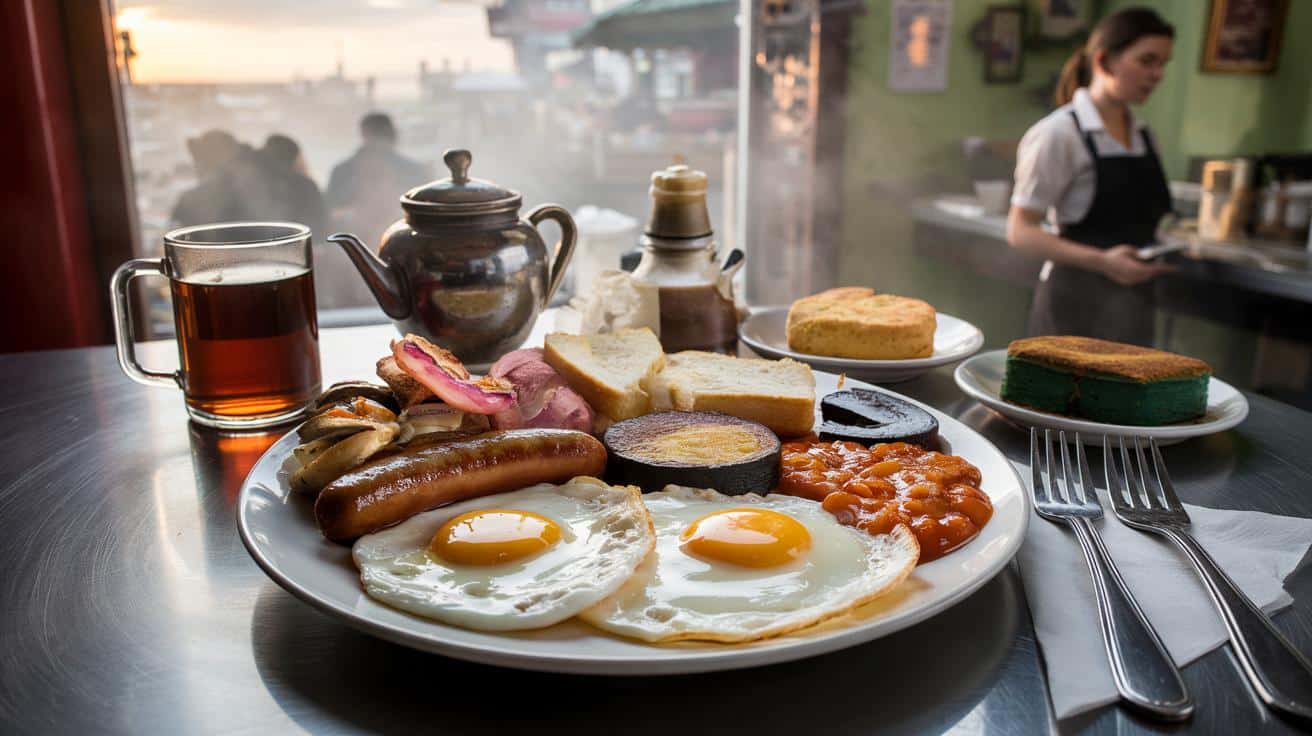
It’s called “full English” in some places and “proper breakfast” in others, yet everyone swears theirs is the real deal. How did a plate of bacon, eggs and odds and ends become a badge of belonging? And why does it still pull crowds in an age of smoothies and overnight oats?
The café door hisses open at 7:02am. Steam fogs the window, bacon crackles like small fireworks, and a builder in paint-speckled trousers points at the hotplate with a grin. Two eggs sunny, sausages on the turn, mushrooms drinking butter like they mean it. The server knows the usuals without asking. She glides plates along the counter, thumbs tucked under the edges to dodge the heat. A laminated menu curls at the corner. Tea arrives in a chipped pot. The smell of bacon at 7am is a time machine. It wasn’t always this way.
From manor tables to greasy spoons: the long road to a “full” breakfast
Before it met the caff, the morning fry was a matter of prestige. In medieval halls and later Georgian houses, landowners liked to show off their bounty at breakfast: cured meats from the smokehouse, eggs from their own yard, bread from yesterday’s bake. Hospitality meant laying on plenty. The plate wasn’t a strict formula; it was a message. Meat and warm bread meant safety. A hot pan meant a household alive and humming.
By Victorian times, that message hit the city. Clerks started earlier, and the new middle class had sideboards groaning with dishes: bacon and eggs, grilled chops, kidneys, fried bread. Boarding houses and railway hotels copied the idea, serving a “full” spread to travellers and workers before long commutes. Cans joined the party in the early 20th century, which is how baked beans slid onto the plate. Breakfast became both portable and predictable, ready for a nation on the move.
Industry pressed the pattern into habit. Cheap bacon flowed in, tinned tomatoes stood in for seasonality, and a shared language of breakfast took root in pubs and cafés. Rationing dented it during the war years, but the craving didn’t fade; it came roaring back with new affections: HP sauce, white toast triangles, mugs of builder’s tea. Regional twists wrote their own lines—tattie scones in Scotland, soda farls in Ulster, laverbread in south Wales, white pudding in Ireland—creating a family of “fulls” under one canopy. One plate, many accents.
How to cook a modern fry-up without the panic
Start with order. Put sausages in the oven first at a moderate heat, so they cook through without splitting. Halve tomatoes and salt them; pan-roast cut-side down until they get a deep, jammy char. Mushrooms want room, not steam—fry in a wide pan with a pinch of salt and a little butter and oil. Bacon next, on medium heat, letting the fat render slowly until edges frill. Beans? Warm gently in a small pot, never to a boil. Eggs last, because they’re bossy and quick. Warm plates matter more than you think.
Grease management is a small art. Tip off excess fat between items, but save a spoon of bacon drippings for frying bread or hash. If you like crispy edges on your eggs, toss in a whisper of hot fat and baste for ten seconds. For speed, par-cook sausages ahead, then finish in the pan for colour. If you’re going lighter, grill tomatoes and mushrooms, swap fried bread for toast, and lean into herbs. Let’s be honest: nobody really does this every day.
Common mishaps are simple fixes. Mushrooms go soggy when crowded; cook in batches and salt early to draw water. Beans taste flat without a pinch of paprika or a splash of brown sauce. Black pudding crumbles if you slice it too thin or rush the heat; treat it like a steaklet. Be kind to yourself if the timing gets messy—every caff cook learned by burning a few rounds.
“A proper fry is choreography,” says Pat, who’s run a south London café for 28 years. “Heat, space, and not panicking. The plate tells you what to do next.”
- Sequence to remember: sausages, tomatoes, mushrooms, bacon, beans, eggs.
- Warm plates and mugs. Hot food hits cold china and sulks.
- Season each element. Salt isn’t a one-time event.
- Regional swaps: add tattie scones, soda farls, laverbread or potato bread.
- Five-minute rescue: eggs on toast with beans and a sausage from the freezer.
Why the fry-up still matters
The fry-up is a story you can eat. It tells of farms and factories, seaside guesthouses and motorway cafés. It speaks a language of thrift—using the fat for flavour, stretching a meal with bread—and of mischief too, that second sausage no one needs but everyone wants. For many, it’s the plate you order when you’ve earned a treat, or when your brain needs ballast after a long night.
It’s also social. A greasy spoon at 8am is a community hall without speeches: nurses post-shift, cabbies between runs, grandparents treating the grandkids. Trends swirl around it—sourdough, hash browns, plant-based sausages—and the plate listens, then chooses what to keep. We’ve all had that moment when the first forkful resets the day.
As the country rewrites its diet around health, money and planet, the fry-up is learning new steps. Smaller portions, better bacon, seasonal tomatoes, mushrooms from down the road. Some swap black pudding for grilled halloumi; others go full vegan with smoky beans and crisped tofu. The spirit holds: hot, generous, familiar yet open to change. The national breakfast keeps earning its name by flexing with us.
| Key point | Detail | Interest for the reader |
|---|---|---|
| From gentry to cafés | Breakfast moved from manor-house showpiece to everyday caff ritual via Victorian hotels and industry | Explains why a “full” plate feels both posh and ordinary |
| Regional families | English, Scottish, Irish, Welsh versions share a template but swap breads and puddings | Lets you personalise your plate with heritage-friendly tweaks |
| Modern craft | Order, heat control, and small seasoning choices turn a good fry into a great one | Practical steps you can use this weekend |
FAQ :
- What’s the difference between a full English, Scottish, Irish and Welsh?They share core items (eggs, bacon, sausage) but swap sides: tattie scones in Scotland, soda or potato bread in Ireland, laverbread and cockles in Wales.
- Are baked beans “traditional” on a fry-up?Beans arrived with tinned goods in the early 20th century, then stuck. Not ancient, very normal now.
- Is a fry-up unhealthy?It can be heavy, yet you can lighten it—grill some items, choose leaner cuts, go smaller on portions and bigger on tomatoes and mushrooms.
- What’s the best order to cook everything?
Sausages first, tomatoes and mushrooms next, then bacon, warm the beans gently, cook eggs last, plate on warm dishes.
- Where does black pudding fit in the history?
It’s an old blood sausage tied to nose-to-tail cooking. A thrifty staple long before cafés made it a standard.

Loved the social history thread—from manor bragging rights to greasy spoon ritual. That line about the smell of bacon as a time machine is spot on. Also, the regional nods (tattie scones, laverbread) made me hungry; this is defintely the most evocative food writing I’ve read this week.