
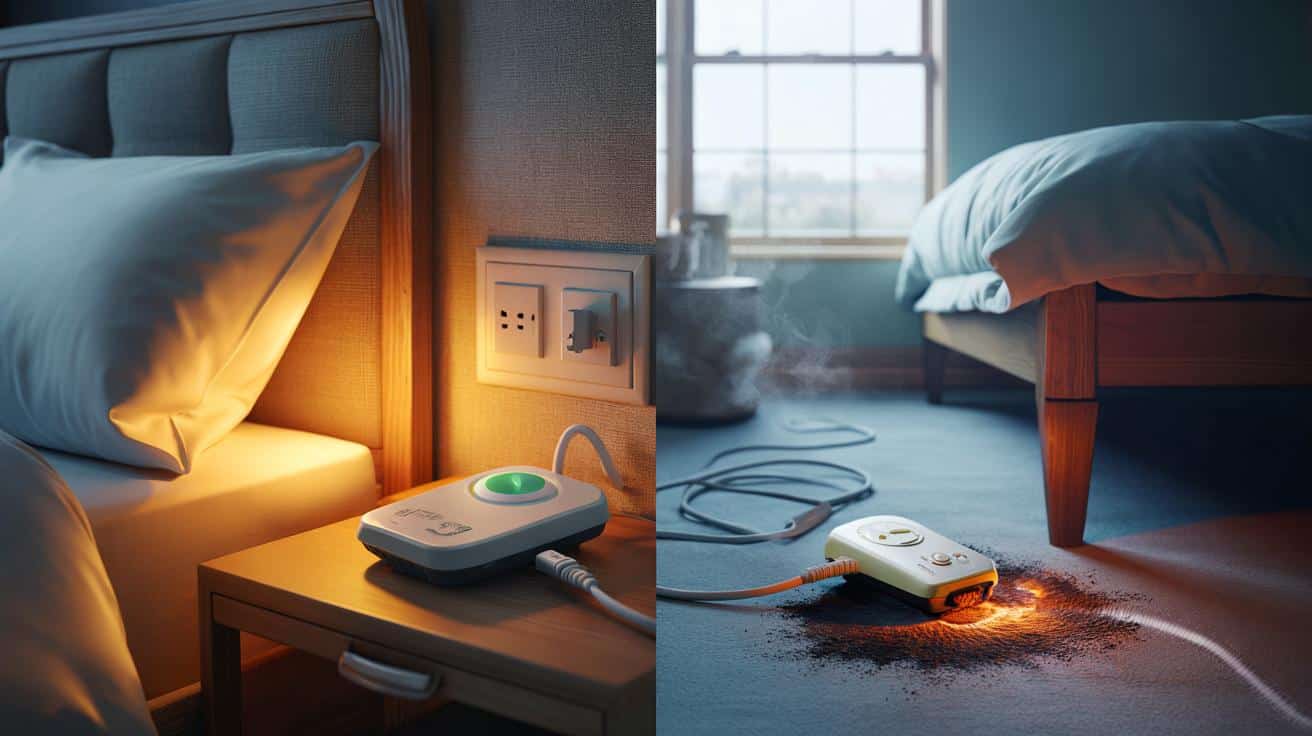
They’re cheap to run, warm fast, and look harmless. New safety data has landed though, and it raises a real question for anyone plugging one in tonight: comfort or risk, where’s the line?
The first cold snap arrived on a Tuesday. Condensation on the sash window, breath visible in the shaft of grey light, and that tiny thrill of tapping the remote to pre‑warm the mattress while the kettle sighs. I watched the blanket’s indicator blink from red to green and thought nothing of it, until a neighbor’s group chat lit up with a photo of a singed controller on a throw bought online for a bargain. No one was hurt, thankfully. It left a smell and a feeling that didn’t lift easily. Then the data landed.
Across the UK, electric blankets have become a quiet hero of the cost‑of‑living era. Plug in, heat yourself not the room, and keep the thermostat at a number that doesn’t sting. They’re a small rebellion against big bills, and in many homes they’re on longer than the box ever imagined. The new safety briefings don’t say “stop”; they say “look closer”.
Take a quick walk through any online marketplace and you’ll see heated throws for less than a takeaway. They look the same as premium models, and the reviews feel reassuring. Several recent Trading Standards spot‑checks have found a high failure rate among the cheapest imports, with problems ranging from flimsy plugs to missing thermal cut‑outs. A North West fire crew shared images of melted controllers last month, and the photos tell their own story. For a few pounds saved up front, the margin for error narrows fast.
What the latest safety notes reveal is almost boring in its predictability: **old‑and‑damaged blankets drive most risk**. Frayed cords trapped under bed legs. Creases that concentrate heat. Out‑of‑date controllers without modern overheat protection. The pattern is clear in fire reports and lab tests alike: when the blanket is up to standard, used as directed, and not on its last legs, incidents are rare compared with cooking or smoking. The danger clusters around age, misuse, and rock‑bottom kit.
If you’re going to keep using one, do it the low‑drama way. Start with the label: look for UKCA (or CE on older stock), a model number, a reputable brand you can contact, and a visible compliance mark such as BEAB Approval. Check the manual references to BS EN 60335‑2‑17 for electric blankets. Use it from a wall socket, not a multi‑way adapter, and keep the controller off the bed where it can ventilate. Pre‑heat for 15–30 minutes, then drop to low or switch off and hold the heat under a duvet. That’s the cheapest, safest sweet spot.
Storage and setup matter more than people think. Lay it flat, no creases, and don’t tuck it in so tight that the wires bend sharply. Avoid stacking heavy throws on top that trap heat, and skip hot‑water bottles on the same bed – leaks plus electrics is a bad duet. Pets? Keep them off; claws and cables don’t mix. Wash only if the manual says so, unplug the controller first, and dry fully before use. Let’s be honest: nobody checks their blanket every month. Make it a Sunday kettle ritual once a season and it’ll actually happen.
There’s a second piece to the puzzle: choose the feature set that forgives little lapses. Auto shut‑off after 3, 6 or 9 hours is not a gimmick; it’s a backstop. Dual controllers stop arguments and let one side run cooler. A sturdy, removable connector is your wear‑and‑tear weak link, so spare parts availability is a quiet sign of quality. If the blanket is older than ten years, it’s living on borrowed time.
“Replace on age, not on luck. If the cord is stiff, the controller cracked, or the plug gets warm, it’s time to retire it.”
- Buy from a known UK retailer with a traceable brand and a real warranty.
- Check recalls on gov.uk or via Electrical Safety First before first use.
- Roll to store, never fold; heat wants curves, not corners.
- Keep liquids and hot‑water bottles away; choose one source of warmth.
- Pre‑heat, then sleep on low or switch off under a good duvet.
Here’s the headline from the newest safety guidance making the rounds in UK fire services: most incidents are preventable, and the riskiest setups are painfully familiar. Older blankets without modern cut‑outs. Bargain throws bought from third‑party sellers with no paperwork. Controllers tucked under pillows where they overheat. We’ve all had that moment where comfort meets habit, and habit wins. The smarter path isn’t abstinence; it’s **buy from a reputable UK retailer**, treat age like mileage, and use a few simple habits that lower the temperature on risk. That way the blanket remains what it should be — quiet, cosy, and forgettable in all the right ways.
| Key point | Detail | Interest for the reader |
|---|---|---|
| Product age and condition drive risk | Replace at ~10 years or sooner if damage, stiffness, hot plugs, scorch marks | Clear trigger to act without needing a lab test |
| Standards and features matter | Look for UKCA/CE, BEAB Approval, BS EN 60335‑2‑17, overheat cut‑out, auto shut‑off | Quick checklist to separate safe from shaky |
| Smarter usage saves money and risk | Pre‑heat, then low or off; wall socket only; no creases, no hot‑water bottles | Warmer nights for pennies, with fewer worries |
FAQ :
- Is it safe to sleep with an electric blanket on all night?Use the low setting or a timer with auto shut‑off, and keep the controller ventilated. The safest routine is **pre‑heat, then sleep on low** or switch off under a decent duvet.
- Are heated throws safer than underblankets?Neither is inherently safer; the build quality and features decide. Throws are mobile, which invites tangles and spills, so treat cables gently and keep drinks away.
- Can I use one with a memory‑foam mattress?Check your mattress warranty. Some foams dislike sustained high heat, and manufacturers may advise pre‑heat only or a topper in between to protect the foam.
- How much does it cost to run?Most modern blankets draw 50–120W. At a typical UK unit rate in the 20–30p/kWh range, that’s roughly 1–4p per hour on low. Cheaper than heating a whole room.
- When should I replace my blanket?At around ten years, or immediately if you notice damage, intermittent heat, a warm plug, a cracked controller, or if it lacks modern overheat protection.






Great read—clear, practical, and not scaremongery. I’d pay a bit more for BEAB/UKCA, auto shut‑off, and a sturdy connector. “Pre‑heat then low/off” is a tip I’ll definitly use. Thanks!