
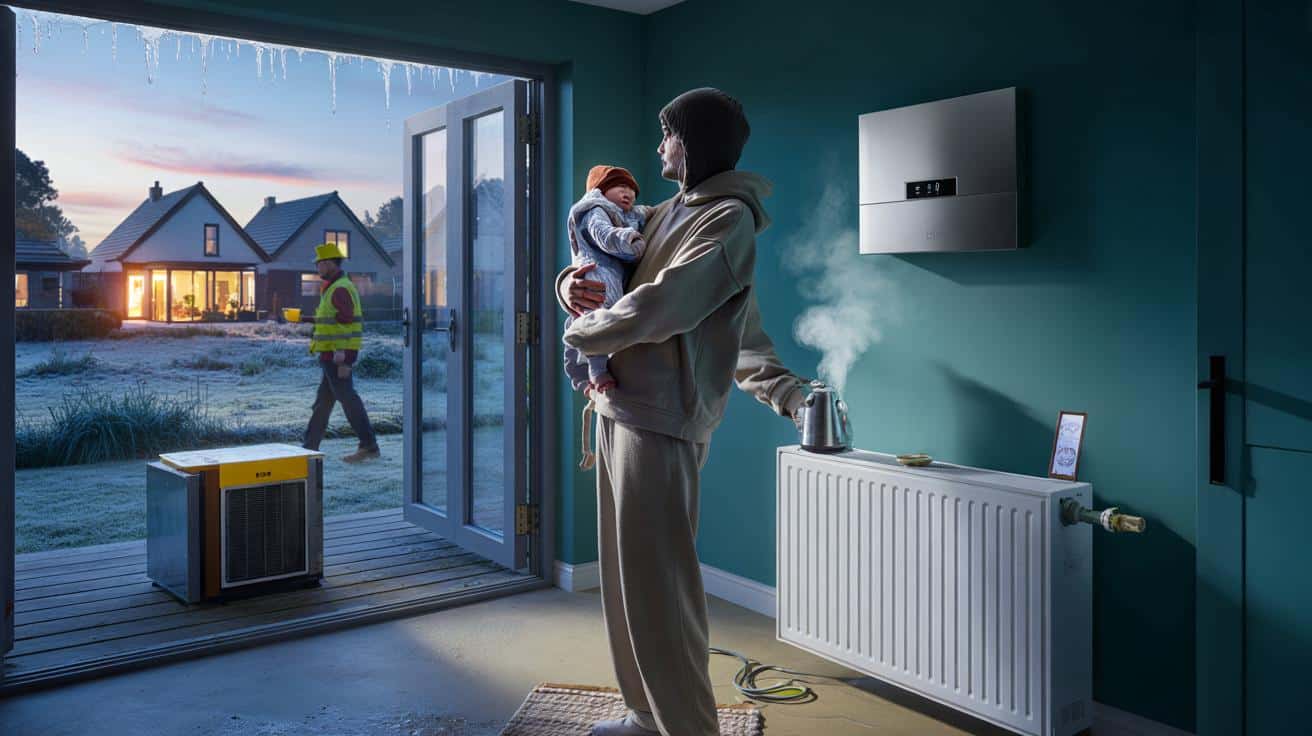
What they got was a cold riddle. Across the UK, thousands of owners are waking to icy rooms, clacking radiators, confused thermostats, and builders who say “it’s within tolerance”. Marketing promised cosy. Reality is chattering teeth.
The kettle whistles into a room that still feels like the outside. It’s 7am and you can see your breath in the kitchen light, the newborn bundled in a sleepsuit while the thermostat claims 21C. Next door’s WhatsApp pings: “Anyone else freezing?” Down the road, site workers tramp past with disposable coffee cups, the show home glowing like a lantern. You prod the settings again, then check the radiators, then wonder if it’s just you. The developer’s helpline is jammed and the advice online is a bramble of acronyms. Something doesn’t add up.
Why new-builds are running cold
The gap between what’s designed and what’s delivered is wider than a draught under a front door. We build airtight boxes that should be easy to heat, then they ship with systems set wrong, sensors in the wrong spots, and emitters too small for low-temperature heating. **New-builds are supposed to be warmer, not colder.** Owners report rooms that never quite reach target, heat pumps short-cycling, and underfloor loops that feel lukewarm even after hours. Sales brochures show thermal images tinted gold. The lived picture often looks blue.
Ask around and you’ll hear the same beats. A couple in Milton Keynes live with a heat pump capped at 35°C flow, a hallway thermostat baking above a radiator, and bedrooms that stall at 17°C. On Facebook groups for snagging and new-build owners, thousands of posts describe cold zones, balancing woes, and “it’s normal” emails. The New Homes Ombudsman has seen a swell in heating complaints, and surveyors talk about a winter of callbacks. One neighbour sums it up in four words: “It’s new. It’s freezing.”
There’s logic behind the misery. Low-carbon rules push homes toward low-temperature systems, which need bigger radiators, careful pipe sizing, and proper balancing. If a developer squeezes microbore pipework or misses commissioning, rooms starve. If thermostats sit in sunlight or above hot pipework, control logic gets dumb. **Rush-to-complete culture means systems often go live before plaster fully dries and before anyone shows owners how to run them.** We’ve changed the hardware of British heating without changing the habits, the training, or the time allowed to do it right.
How to warm a freezing new-build today
Start with a clean baseline. Note indoor temps in each room morning and evening, then check your system: pressure at 1.0–1.5 bar, radiators bled, all TRVs fully open for testing. If you have a heat pump, pick a steady 19–20°C and let it run 24/7 for 48 hours; don’t yo-yo schedules. For a boiler, set a moderate flow temperature (60–65°C radiators, 45–50°C underfloor) and listen for cycling. Then balance: throttle lockshield valves so every radiator shows a 10–12°C drop from inlet to outlet. It’s dull work. It’s magic.
Common mistakes trip good people. Turning a heat pump on and off like an old combi leaves rooms cold and bills high. Blocking MVHR grilles with furniture kills airflow and creates chilly corners. New homes shed litres of moisture from fresh plaster, so they can feel clammy-cold for weeks unless you ventilate and keep gentle heat on. We’ve all had that moment where the timer is wrong by a weekday, and the house wakes an hour late. Let’s be honest: nobody does that every day. A quiet check on Sunday saves a frosty Monday.
“Eighty per cent of what I fix is commissioning,” says Sam, a heating engineer who spends January in new sites. “The kit is fine. The settings and the balancing aren’t.”
*The house looks perfect; the chill is not.* Make an action box you can tick through in under an hour:
- Photograph each room’s temperature at set times for a week.
- Record flow temperature, pressure, and any fault codes.
- Run a slow thermal camera sweep or hire one for a night.
- Balance radiators, then recheck temps after 48 hours.
- Email the developer with evidence and request a commissioning revisit.
What to push for with your builder and warranty
Your leverage lives in evidence, process, and persistence. Builders respond faster to clean data than to rage, so lead with logs, photos, and a precise ask: full system commissioning with room-by-room heat-loss checks, emitter sizing verification, and thermostat relocation if needed. If that stalls, bring in an independent snagging surveyor; a simple report can shift the tone in a week. The New Homes Quality Code and the Ombudsman route exist for a reason, and your policy with NHBC, LABC, or Premier Guarantee covers services and installation defects in the early years. **Push for the fix, not a shrug.** Share notes with neighbours, because patterns matter: ten similar houses with the same cold bedroom turn “your problem” into “site-wide fault”. Quietly, this is how a cold estate becomes a warm one.
| Key point | Detail | Interest for the reader |
|---|---|---|
| Heat pump habits | Run steady setpoints, avoid on/off cycling, use weather compensation | Warmer rooms without bill shocks |
| Commissioning checklist | Balance radiators, set correct flow temps, move rogue thermostats | Fixes many “mystery” cold spots fast |
| Escalation path | Evidence log → builder’s remediation → independent survey → Ombudsman/warranty | Clear route from frustration to resolution |
FAQ :
- Why is my brand-new home colder than my old terrace?Your new place likely uses low-temperature heating that needs bigger emitters and careful setup. If commissioning was rushed, rooms never reach target before the system cycles.
- Should I leave a heat pump on all the time?Yes, mostly. Heat pumps work best with steady, low output. Set a comfortable baseline and let weather compensation adjust; nudge 1°C up for short spells rather than big swings.
- My boiler is fine, but one bedroom stays cold. What now?Balance the system. Open all TRVs, then throttle lockshields on hot rooms until that cold room catches up over 24–48 hours. Check pipework sizing if balancing fails.
- Can I refuse completion if the heating doesn’t work?If you’ve not yet completed, you can delay or set conditions. After completion, use the snagging period, the builder’s complaints process, and your warranty to compel fixes.
- Is underfloor heating supposed to feel just warm, not hot?Yes. UFH runs cooler but longer. Floors should feel gently warm, not toasty. If rooms don’t reach setpoint, ask for a manifold flow check and recalibrated curves.






Is this just a winter blip or are developers cutting corners on every site? I’m seeing the same “within tolerance” script in Manchester. Anyone got results after escalating?
New-build in Bristol here: heat pump stuck at 35°C flow, hallway stat above a radiator, bedrooms stalled at 17°C. Developer kept saying it’s “in spec”. I started a simple log (AM/PM temps, pressure, flow), bled rads, then balanced for a 10–12°C drop. Huge difference. An independant snagging surveyor also got the thermostat moved. Night-and-day. If you’re freezing, gather evidence and ask for full commisioning, not just “we’ll take a look”. Don’t be affraid to quote the New Homes Quality Code.