
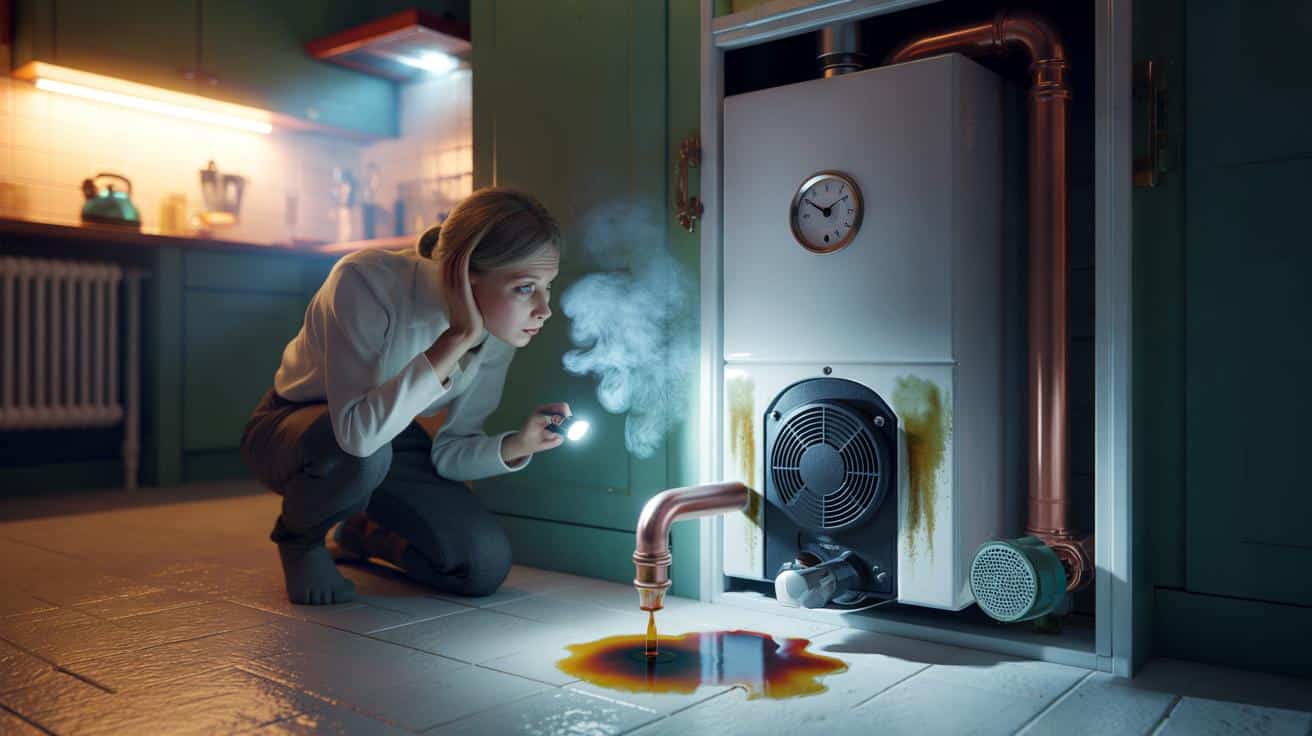
You twist the thermostat, wait for that friendly hum… and instead get silence, or a clunk that sounds like a lift with the cables cut. When a boiler dies, it does it on the coldest morning, with a school run and a Zoom call looming. The trick is catching the whispers before the shout.
The kitchen was blue with early light, kettle steaming, cat plotting. The radiators should’ve been ticking into life, but the house felt like a shed. Down in the cupboard, the boiler coughed, whirred, then paused like it had changed its mind. A muted hiss. A gulp. Then, that faint kettle-on-the-stove note you only hear when you’re standing still, holding your breath, not wanting it to be bad news.
I watched the pressure gauge slide down after every shower. I reset the boiler twice in one week and told myself it was “just a blip.” The pipes knocked once, then again, like a warning. The error code flashed and vanished, as if embarrassed. The heating worked—mostly—but it wasn’t right. The boiler had been whispering for weeks.
Five warning signs your boiler is about to break
The first sign is sound. Not the usual soft whoosh, but **kettling**—that whistling, tea-kettle tone from limescale baking on the heat exchanger. Or banging and clunking as water boils in pockets and steam hammers in the pipework. Gurgling means air, a trapped bubble tumbling around the system. Your ears become the best tool you own when it comes to boilers. Listen once with everything else quiet. You’ll hear the story.
A second sign hides in plain sight: the pressure gauge. You start the week at 1.4 bar and, by Wednesday, it’s sunk to 0.8 with no dramatic reason. Or it lurches high, near the red, after the heating kicks in. A leak leaves tell-tale freckles on the carpet under a combi, or a slow, tidy drip inside a cupboard you don’t check enough. I met Sarah in Leeds who topped up every other day, thinking it was normal. The expansion vessel had failed; the boiler was doing heavy lifts on every cycle.
Heat that comes and goes is the third clue. Hot water that runs warm at the tap, then sighs cold mid-shampoo. Radiators with hot tops and icy feet, or rooms that never quite arrive at cosy. Fourth, smells and marks: sooty smudges around the casing or a faint metallic tang can spell combustion trouble. Fifth, resets and odd behaviour—fans whir without firing, lights flick between green and red, the boiler takes three tries to wake. These are small malfunctions that add up to a breakdown. *Your boiler isn’t being moody; it’s sending signals.*
How to prevent the breakdown and stretch your boiler’s life
Build a 10-minute monthly ritual. Check the pressure when the system is cold; most domestic boilers like 1.0–1.5 bar. Top up slowly via the filling loop, then bleed any radiators that gurgle or feel patchy—start upstairs, keep a cloth handy, aim for a steady trickle. Glance under the boiler for damp. Run the hot tap and listen once for that kettle note. If it sings, think limescale: a magnetic filter and inhibitor in the system make a quiet hero’s difference. Let’s be honest: nobody really does that every day.
Two common mistakes cause a lot of call-outs. We ignore tiny leaks because the puddle evaporates by morning. We crank the thermostat to 25°C “just to get it going,” which doesn’t heat faster, it only overshoots. Keep flow temperature sensible—low 60s for radiators, low 50s for combis if your home still heats comfortably—and insulate any bare pipes in the loft. Run the heating for 15 minutes every couple of weeks in summer to keep the pump and valves moving. We’ve all had that moment when you gamble it’ll be fine until October. That gamble gets expensive.
Get a yearly service with a Gas Safe registered pro, ideally before the first cold snap. They’ll test combustion, clean the burner, check the expansion vessel, and measure carbon monoxide. If your boiler is older than a decade, ask for a frank view of parts availability and efficiency. A small, early fix often costs less than the emergency that follows.
“The earliest warning signs are sound, pressure drift, and little leaks,” says Martin, a Gas Safe engineer in Bristol. “If it’s started resetting or leaving sooty marks, kill the power and call. That’s safety, not comfort.”
- Quick prevention checklist:
– Pressure between 1.0–1.5 bar when cold
– Bleed radiators that gurgle or have cold spots
– Look for drips, damp rings, or green crust on joints
– Fit inhibitor and a magnetic filter
– Book an annual service before autumn
Keep the heat, keep your calm
A boiler on the brink rarely fails out of nowhere. It leaves crumbs: a hiss here, a lukewarm bath there, the gauge that never sits still. Spot the pattern and you buy yourself time—sometimes months, sometimes a whole winter. Talk to your boiler like you’d listen to your car. The odd noise, the changed behaviour, the warning lights that arrive at 6am—they’re trying to tell you a small thing is becoming a big thing.
Prevention isn’t glamorous, but it’s practical, affordable, and oddly satisfying. A quiet system, an even heat, a gauge that returns to normal—those are reliefs you feel in your shoulders. Share the checklist with your group chat, compare the weird noises, swap photos of mystery drips. The cold snap will still come. You’ll meet it ready.
| Key point | Detail | Interest for the reader |
|---|---|---|
| Noises tell the truth | Whistling = limescale; banging = boiling/hammer; gurgling = trapped air | Translate odd sounds into clear actions before parts fail |
| Watch the pressure | Steady cold pressure ~1.0–1.5 bar; drifting means leaks or vessel issues | Prevents repeat top-ups, wasted energy, and surprise breakdowns |
| Service and simple habits | Annual Gas Safe check + monthly 10-minute walkaround | Lower risk, lower bills, longer boiler life |
FAQ :
- What boiler pressure should I see when the system is cold?Most domestic systems are happy between 1.0 and 1.5 bar when cold. After heating up, you might see it rise by 0.3–0.5 bar. If it keeps sinking or hits the red, something’s off.
- Is a noisy boiler dangerous?Noise by itself isn’t always a danger sign. Kettling points to limescale, banging to boiling pockets or loose pipework. Sooty marks, a yellow instead of blue flame, or burning smells are safety issues—turn the boiler off and call a Gas Safe engineer.
- How do I know if it’s worth repairing or time to replace?Think about age (10–15 years is the usual turning point), frequency of faults, and part availability. A single sensor swap can be great value. A heat exchanger plus multiple call-outs on a 13-year-old boiler often tips the maths toward replacement.
- Can I safely top up the pressure and bleed radiators myself?Yes, those are typical homeowner jobs. Use the filling loop gently and stop around 1.3 bar when cold. Bleed radiators with the heating off, collect drips, then re-check pressure. Don’t open the boiler casing or touch combustion components.
- Do I need a service every year?Yes—for safety, efficiency, and warranty. A yearly service checks combustion, flue integrity, gas rate, and critical seals. Tiny issues get caught while they’re still cheap. **Skipping two winters** often ends in an emergency call at 7am.







Loved the tip about listening once with everything else quiet. We’ve had that “kettle-on-the-stove” note for weeks in a hard-water area—would a magnetic filter plus inhibitor actually fix kettling, or is descaling the heat exchanger inevitable? Also, is the 60°C flow temp still OK for older rads? This was super helpful, thanks!
Good read, but I’m not sold on the “run heating every couple of weeks in summer” advice. Isn’t that wasted gas if the system seems fine? Modern pumps are self-lubricating, right? Also, annual service “before autumn” sounds like peak prices—spring bookings are cheaper where I live. Convince me I’m wrong.