
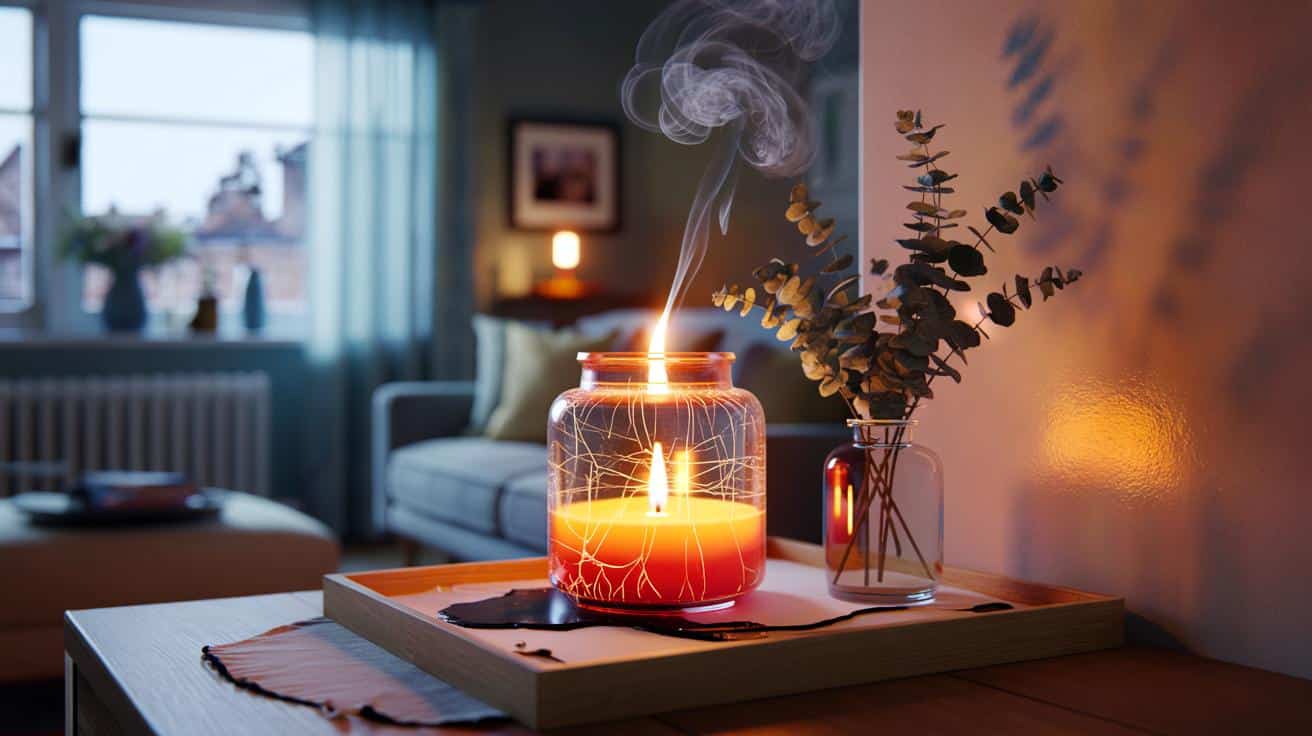
A couple in a quiet British cul‑de‑sac lit a candle after dinner, the kind you buy for a slow evening and a soft glow. Twenty minutes later, they were on the pavement barefoot and shaking, watching orange climb their living room wall like a living thing. “We lost everything,” they tell anyone who will listen now. A sofa, baby photos, a winter coat still warm from the radiator, the grain of the dining table where the first pen marks never quite sanded out. Fire crews were there fast. The smoke was faster. The lesson is simple, the kind that comes too late.
It was a candle they’d lit a hundred times.
“We lost everything” – the night a small flame took a whole life with it
They’re Sophie and Mark, 34 and 36, the sort of people who keep spare biscuits for neighbours and muddy trainers by the door. On Tuesday, they lit a scented candle on the sideboard to drown out the smell of frying. They opened a window. They put on a playlist. The wick tunnelled, the flame leaned, and the glass finally cracked with a noise like a clinked wine glass. They heard it. They thought it was the washing machine. By the time Mark stepped out of the shower, the curtains were already breathing smoke.
We’ve all had that moment when you nip upstairs for “just a minute” and forget the thing you left on. Across the UK, fire services still attend hundreds of house fires each year sparked by candles and tea lights. In Sophie and Mark’s semi, the candle sat on a wooden tray, next to a dried eucalyptus bunch someone brought to a housewarming. Pretty in the afternoon. Wildly combustible in the evening. In under eight minutes, the room went black with smoke, then orange. **They lost everything in under eight minutes.**
The pair repeat the same sentence to everyone now: it wasn’t dramatic until it was. There were working smoke alarms. There was a fire extinguisher in the utility cupboard, still in its plastic. The cat darted under the bed. The neighbours banged the door. There is a way a life falls apart that looks ordinary at first, and then a way the bits don’t fit back. A flame doesn’t think. It just finds fuel. And in a modern home, there’s endless fuel dressed up as comfort, style, scents and quiet nights in.
The invisible rules of flame – and the tiny habits that spare you grief
Here’s the small, precise habit that could have saved their home: treat a candle like a tool, not a decoration. Trim the wick to 5 mm before each light. Put the jar on a thick, non‑flammable base that stays cool, never on wood or fabric. Keep a 30 cm bubble of nothing around it: no books, no dried flowers, no picture frames that can tip. Open windows can push flames sideways, so keep the air still. And when you leave the room, or feel your eyelids getting heavy, blow it out. No exceptions. If it helps, pair the action with your phone timer. Candles don’t keep time. You do.
There are mistakes almost everyone makes. Tea lights straight on a shelf can get hot enough to scorch and split varnish. Glass jars can fail if the wax burns to the last millimetre, heating the base beyond what it can take. Wicks that mushroom make taller, sooty flames. People move a lit candle with hot wax sloshing; one slip, and that’s a carpet full of flame. Let’s be honest: nobody really does that every day. So build one anchor habit: wick trim, base check, clear zone, timer. That’s the ritual. Keep a metal lid nearby to smother, and a jug of water a step away, not across the kitchen.
There’s something else: the blame is never the candle alone, it’s the room we’ve built around it.
“We weren’t careless people,” Sophie says, holding a scorched key she wears on a string now. “We were tired people. And that tiny flame didn’t care.”
- Keep candles 30 cm from anything that can burn; think curtains, books, dried plants, string lights.
- Use a coaster of slate, tile, or metal; avoid wood, plastic, and fabric runners.
- Stop burning when 1 cm of wax remains; that last glow is the most dangerous.
- Never leave a child, pet, or open window alone with a flame. Kitchens count as “alone”.
- End the night with one rule: out means out. Say it out loud if it helps.
What we carry forward when the smoke clears
On the morning after, Sophie stood in borrowed trainers on their front garden, picking through a box of damp, singed things. The cat had been found by a firefighter, soot‑striped, alive and furious. Neighbours brought tea, a duvet, phone chargers. There’s a daft grace to crisis in Britain: someone always arrives with biscuits. The part that takes longer is the quiet inventory of what’s gone. The jacket you wore to your mum’s birthday. The kids’ drawings that never made it to a frame. The feeling that your space is safe just because you’re good people.
What they want now is not pity, it’s prevention. They’ve taped a tiny note above their new hob: “Flame = plan.” It’s a reminder that nothing with heat is background noise. **A candle is a tiny campfire in your living room.** Campfires need tending, distance, water close by, and a last walk‑round before you sleep. If you wouldn’t leave a campsite with logs still glowing, don’t walk upstairs with a wick still alive. *It sounds strict. It’s actually kind.* Habits that feel fussy today become muscle memory next month, and quiet relief next year.
There’s no tidy moral, just a handful of truths. A house is a web of flammables dressed up as a lifestyle. Soot smudges things; smoke rewrites them. BBQ lighters ignite fear as fast as wax. And nobody is immune because they buy “safe” candles. What helps is attention, once, then a system that keeps paying attention for you. **If you’d blow it out to leave a campsite, blow it out to leave a room.** Share that with the people you love, not as a lecture, but as a favour. It takes ten seconds. It buys back a whole life.
| Key point | Detail | Interest for the reader |
|---|---|---|
| Wick and base matter | Trim to 5 mm; use slate, tile or metal; keep a 30 cm clear zone | Small, repeatable steps that dramatically cut risk |
| End before the last centimetre | Stop burning when 1 cm of wax remains to avoid glass failure and overheating | Counter‑intuitive tip that prevents the most dangerous phase |
| Plan the “out” ritual | Timer on phone, lid to smother, water within reach, final room check | Easy routine that fits real life and tired evenings |
FAQ :
- Can a candle really destroy a whole house?Yes. It doesn’t look like much, but a candle is an open flame that can catch fabric or dried plants within seconds. Once larger items ignite, heat climbs fast, smoke thickens, and the rest of the room follows. Fire crews say that early minutes decide everything.
- What’s the safest way to put a candle out?Use the lid to smother, or a snuffer to starve the flame of oxygen. Blowing works in a pinch, yet can spread hot wax. If wax spills, cool it with water and scrape when solid. Never use water on a large container of hot wax; it can splatter and spread flame.
- Where should I place candles at home?On a stable, heat‑resistant surface, away from edges and drafts, with nothing flammable within 30 cm. Keep them out of reach of children and pets. Don’t cluster multiple jars: heat builds, glass weakens, and one failure can cascade.
- Are some candles safer than others?Thicker glass and cotton wicks help, and unscented tea lights in metal cups are simple. Still, “safer” doesn’t mean safe without good habits. Container quality varies widely; the last centimetre of wax is when problems often start.
- What if I love the cosy vibe but hate the risk?Try LED candles for mood, or use wax warmers with auto shut‑off. If you keep real candles, light them for a short window while you’re nearby, pair with a timer, and do a final “out” round before bed. Your atmosphere shouldn’t cost you your memories.






Heartbreaking read. Thank you for spelling out the small habits—trim to 5 mm, 30 cm clear zone, stop before the last centimetre. I’ve been guilty of letting jars burn to the end (won’t again). I’m definately switching some nights to LED candles and making “out means out” our house rule. Wishing Sophie and Mark peace as they rebuild.
Quick question: did the glass actually crack from heat alone, or was it a manufactoring defect/poor quality container? Any brand info or recall mentioned by the fire crew? I’ve burned the same jar dozens of times and now I’m nervous. Would love specifics or data on container failure rates.