
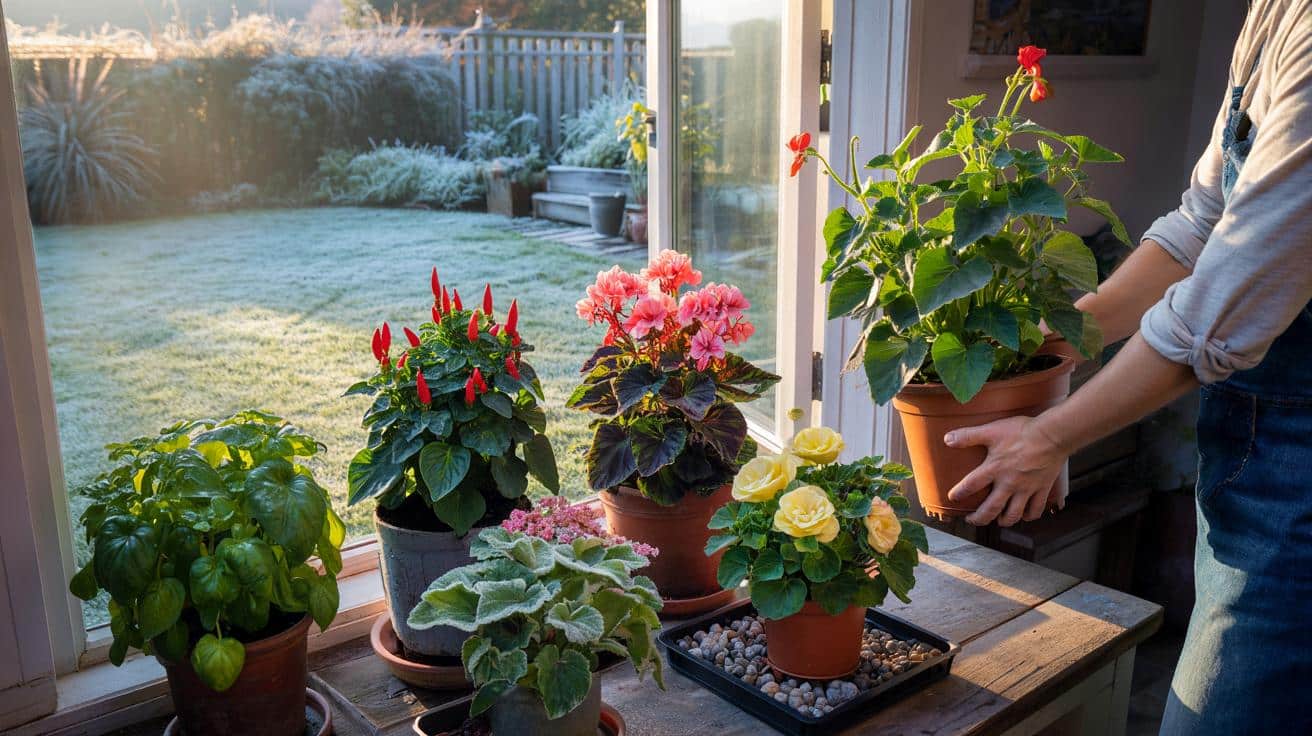
One night your pots look fine, the next morning the leaves hang like wet tissue and you’re left holding a mushy stalk. If you love your summer container stars, there’s a small, decisive window to get them inside before the weather flicks its switch.
I saw it last year just after sunrise, the grass crisp white along the fence and a basil plant on the neighbour’s step collapsed into sorrow. The streets were quiet, the kind of chilly hush where you can hear a bin lid clink two doors down, and every porch had a story: geraniums pink as chewing gum, begonias with leaves like velvet, citrus trees still carrying pale lemons. The first frost doesn’t shout; it whispers on the lawn. I stood there thinking about which seven you save first—basil, chilli peppers, pelargoniums (geraniums), begonias, coleus, citrus, mandevilla—and which you let go. Tonight decides who makes it.
Seven tender plants worth rescuing before frost
There’s a simple rule: if it came from a warm place, the British frost won’t be kind. Start with basil, the herb that turns black at the slightest nip, and chilli peppers, which are actually short-lived perennials that can ride the winter indoors and fruit again. Pelargoniums (the “summer geraniums”), begonias, and coleus fall into the same camp—soft, showy foliage that gives up when the thermometer dives—then finish with potted citrus and mandevilla, those glossy-leaved show-offs that sip sun for a living. These are your must-move crew: **tender herbs**, **patio divas**, and **tropical vines** that hate a cold surprise.
I’ve watched people try to gamble. One October, a friend left her chilli plants out for “just one more week” to ripen the last crop; the frost didn’t care about her timing and the stems went limp overnight, fruit and all. Another neighbour clipped pelargonium cuttings a fortnight earlier and rooted them on a bright kitchen shelf, and while the mother plant sulked, the cuttings sailed through winter and bloomed again by May.
What frost does is both obvious and sneaky: below freezing, water inside plant cells expands and tears the delicate walls; even before that, chill stress messes with sap flow and leaf structure. Basil sulks under 10°C, while citrus starts to grumble if nights dip near 5°C, yet a sheltered porch can feel a degree or two warmer than your open patio. Frost is a ground-level beast too, which is why raised pots and plants tucked by brick walls have a fighting chance and why low terracotta on the lawn gets pinned first.
How to bring them in without drama
Move early, not in a panic at dusk: give plants three to five days to adjust and you’ll avoid a sulk. Start by shifting them to bright shade outdoors for two days, rinse foliage with a gentle spray to dislodge hitchhikers, then pot up with fresh, peat-free compost if roots are circling. The actual move goes easiest on a mild afternoon—settle them by a sunny window or under a grow light, water lightly, and let the room do the warming, not a radiator blast.
Common mistakes begin with kindness that smothers: too much water, too dark a corner, a swift move from blazing sun to dim indoor light. We’ve all had that moment when the leaves yellow a week later and you wonder if you rescued anything at all. Let’s be honest: no one actually does that every day.
Think of it as a gentle handover from patio to parlour, not a rescue mission with sirens. Check leaves after a week, turn the pot a quarter turn, and keep nights calm and steady.
“Bring them in while nights are still cool, not cold, and you’ll keep more leaves on the stems and more flowers in the bank.”
- Stage the move over 3–5 days to prevent shock.
- Rinse, inspect, and isolate for a week to catch pests.
- Bright light beats extra water; use a sunny east or south window.
- Trim leggy growth, then feed lightly after new growth appears.
- Keep pots off radiators; use trays with pebbles for humidity.
A gentle season shift
Saving seven plants isn’t about clinging to summer; it’s about carrying a bit of colour and scent into the months when the sky runs short on light. Citrus glowing with winter fruit can turn an icy morning into a small holiday, while a pot of pelargoniums by the back door softens that return from the school run when your breath puffs like steam. Basil won’t love January, but a modest patch on the brightest sill will still turn pasta into something you can taste before the fork even lifts.
This is also how a garden becomes a quiet companion rather than a fair-weather fling. Bring in what hates frost, leave out what likes the bite, and let the rest compost into next year’s soil. The ritual is simple: a few pots, a few days of care, and a story that runs through the window when the beds outside fall silent.
| Key point | Detail | Interest for the reader |
|---|---|---|
| Timing beats toughness | Move basil, chilli peppers, pelargoniums, begonias, coleus, citrus, and mandevilla indoors before the first frost, ideally while nights are still above 7–10°C. | Prevents sudden leaf loss and saves money on replacements next spring. |
| Acclimation saves leaves | Shift plants to bright shade for a couple of days, then indoors to strong light; avoid a hard jump from sun to dim rooms. | Reduces shock, keeps plants flowering, and shortens the winter recovery period. |
| Pest check at the door | Rinse foliage, inspect leaf undersides, and isolate newcomers for a week; refresh compost for crowded roots. | Stops aphids, whitefly, and fungus gnats from spreading to your whole indoor collection. |
FAQ :
- Can I overwinter chilli plants and get fruit again?Yes. Cut them back lightly, give bright light and a cool, frost-free room, and they’ll wake up with spring growth and flower earlier than new seedlings. You’ll get a head start on summer crops.
- Will pelargoniums bloom indoors all winter?They can flower in bright windows, though blooms slow in the darkest months. Deadhead regularly and feed lightly once you see fresh growth.
- Do I need a grow light for basil?Basil craves strong light; a south-facing sill can work, but short winter days often leave it leggy. A small LED grow light keeps leaves compact and flavourful.
- Is citrus better in a cool room or a warm one?Citrus prefers a bright, cool, frost-free spot around 5–12°C with plenty of light. Warm, dry rooms cause leaf drop, so add humidity and keep it away from radiators.
- What if I spot pests after bringing plants in?Isolate the plant, wipe leaves with soapy water or use a gentle insecticidal soap, and repeat weekly until clear. Yellow sticky traps help catch flying adults like whitefly and fungus gnats.








Brilliant timing—this saved my basil. Last year I waited for “just one more week” and woke up to green mush. Your step-by-step (bright shade, rinse, then indoors) finally makes sense, and the reminder about keeping pots off radiators is gold. Also love the by-the-brick-wall tip; I’d totally forgoten how much a wall buffers the chill.