
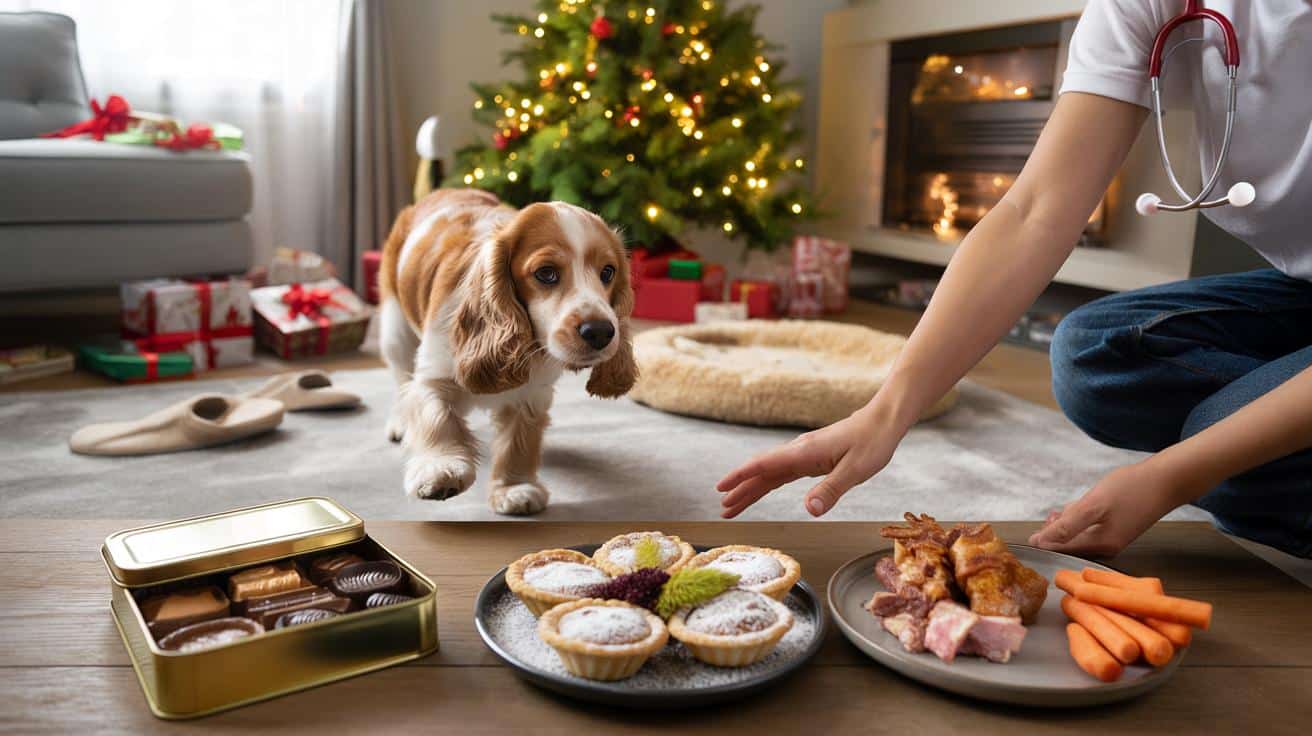
A dog slaloms between gift wrap and slippers, nose twitching at mince pies, pigs in blankets, and a tin of chocolates parked temptingly low. It’s festive chaos, and every surface seems to carry a smell that says “just a lick”. I’m a vet, and this is where the trouble starts.
In the pause before a family shout, you can almost hear the arithmetic: curiosity plus opportunity equals emergency. I’ve seen how quickly the joy of the day can flip into a dash to the surgery.
It’s not that our dogs are naughty. They’re built to scavenge, and Christmas is a buffet with no bouncer. I love the season as much as anyone, but there are three “treats” I would never feed my own dog. Read that again.
Three festive treats I won’t let near my dog
First is the easy one: chocolate in any form, from posh truffles to selection-box buttons. It smells sweet to us and faintly bitter to them, which is part of the trap. **Chocolate is never a harmless nibble for dogs.**
Second is anything loaded with dried vine fruits: mince pies, Christmas cake, pudding, even a slice dropped “just this once”. Some dogs shrug off a raisin; others spiral into kidney trouble from a single bite. Grapes, raisins and sultanas don’t do warnings.
Third is the Christmas fatty free-for-all: pigs in blankets, turkey skin, lashings of gravy, and those rich scraps scraped from the roasting tin. It looks like love, but it’s a shortcut to pancreatitis, painful guts and a very long night. Keep it boring.
I can still picture a spaniel whose family thought they were careful. One selection box vanished in ten quiet minutes while everyone FaceTimed Nan. We kept him on fluids under warm lights till morning, hearts in throats while the theobromine worked its way out. **Grapes, raisins and sultanas are a no-go, full stop.**
Insurers and helplines brace for it every December. Phones ping after the Queen’s Speech, spike on Christmas night, spike again on Boxing Day lunches. The stories are always the same: “It was only one truffle,” “I didn’t know about the raisins,” “He looked so pleased.” Familiar, human, fixable if you move fast.
We’ve all lived that moment when the room goes quiet and you realise the dog isn’t where you thought. The fix starts with naming the villains. Chocolate brings theobromine and caffeine that dogs can’t clear efficiently. Raisins in festive bakes are unpredictably toxic. High-fat meats and trimmings push the pancreas into overdrive and can inflame it badly. That’s the biology behind the drama.
How to keep the mood merry and your dog safe
Set the room up like you would for a toddler. High plates, lidded bin, wrappers in a jar, and a dog-safe treat bowl that’s better than anything on the floor. I like frozen Kongs, plain cooked turkey breast, and carrot batons ready in the fridge.
Make it easy for guests to do the right thing. A small sign by the desserts beats a lecture. Place a cosy bed near the tree and reward your dog for hanging out there. Let’s be honest: no one actually does that every day. Do it this week.
Choose one “polite interrupt” word—mine is “park”—and practise it twice before the guests arrive. If your dog hovers near plates, say the word, toss a safe treat to the bed, repeat. It’s not perfect, it’s practical.
“Festive food isn’t the enemy; confusion is,” a senior nurse told me during a manic Christmas shift. “Give people a safe option and they’ll use it.”
- Swap this: truffles, mince pies, pigs in blankets → for this: carrot batons, plain turkey pieces, dog-safe chew.
- Keep this visible: your vet’s number and your dog’s weight.
- Do this first if they eat something risky: remove access, keep packaging, call the vet.
- Teach this now: “leave it” and “park” with tiny rewards.
The red list, and what it says about love
I know the look a dog gives when a sausage rolls past. I know the look a person gives when they realise they caused harm without meaning to. Celebrations feel most generous when we share, yet the kindest choice is sometimes a calm no. A better snack. A game in the hall. A slow ear scratch while the brandy butter goes out of reach. **When in doubt, ring your vet.** It’s not over-cautious; it’s love acting quickly.
| Key point | Detail | Interest for the reader |
|---|---|---|
| Chocolate is off-limits | Contains theobromine/caffeine, slow for dogs to metabolise; dark chocolate is riskiest | Spot danger fast and avoid costly emergencies |
| Raisin-filled bakes are unpredictable | Mince pies, cake and pudding can trigger kidney issues even in small amounts | Explains why “just a bite” isn’t safe |
| Fatty scraps trigger gut trouble | Pigs in blankets, turkey skin and rich gravy can inflame the pancreas | Helps you design safer plates and habits |
FAQ :
- Can a tiny piece of chocolate really hurt a dog?It can. Size, cocoa content and the dog’s weight all matter, and dark chocolate is potent. Treat it as risky and call your vet for guidance.
- What should I do right after my dog eats a mince pie?Remove access, note the time and amount, keep the packaging, and phone your vet or an emergency line. Don’t wait for symptoms.
- Are pigs in blankets dangerous or just “not ideal”?The fat and salt make them more than “not ideal”. They can tip some dogs into painful pancreatitis. Safer to skip.
- Which festive treats are safe to share?Plain cooked turkey breast (no skin, no bones), carrot or cucumber batons, a dog-safe chew. Keep it simple and unseasoned.
- How do I stop guests sneaking snacks to the dog?Offer a visible bowl of approved treats and a friendly script: “If you want to treat him, please use these.” It works better than scolding.




As a new dog owner, this was the reality check I needed. I had no idea raisins in mince pies could be so unpredictably toxic. The tip about a visible treat bowl and a “polite interrupt” word is gold. Printing my vet’s number and my dog’s weight for the fridge tonight.