
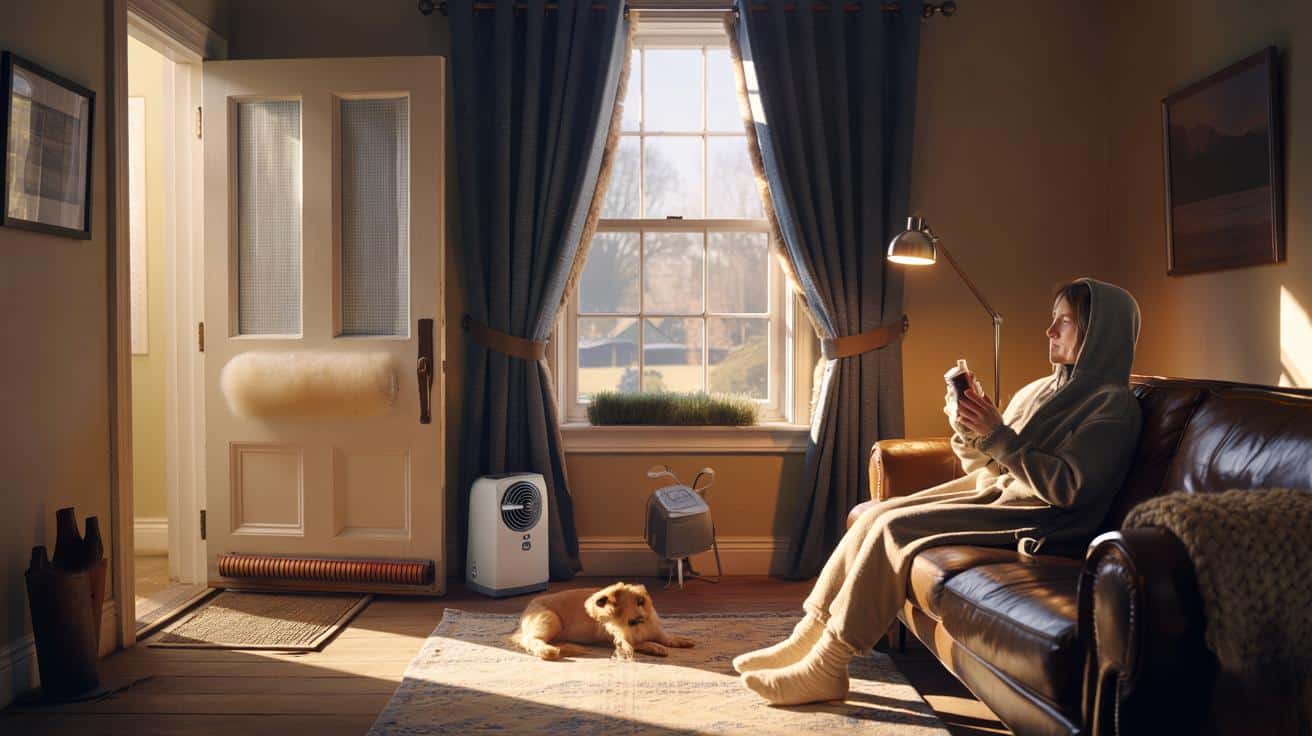
The dog shifts to a patch of sun on the rug, the only warm square in the room. We’ve all had that moment when you hover over the thermostat, finger poised, then pull back because the bill arrived yesterday and your stomach dropped. So you put on a jumper, tuck your toes under you, and stare at the window where the curtains don’t quite meet. You notice how the cold creeps in, not dramatically, but in little sly ways: a letterbox flap shivering, a hairline crack under the back door, a floorboard that sighs cold air with every step. It’s not just temperature; it’s movement, moisture, light. Warmth hides in plain sight.
Method 1: Seal the shell like a pro
Heat doesn’t only vanish through walls; it’s nudged out by sneaky draughts at eye level and ankle level. **Plug the cold at human height**. Self-adhesive foam strips on window frames, a brush strip on the front door, a simple cover over the keyhole — these are small fixes with big feel. A £10 letterbox draught excluder stops that icy whistle in the hallway, and a chimney balloon blocks a chilling stack effect if your fireplace is idle. It’s amazing what a £3 roll of tape can do.
In a Leeds semi, I watched a neighbour spend 20 minutes sealing the obvious gaps: foam strip around a wobbly sash, a bead of clear silicone where a skirting board gaped, and a rolled towel as a quick door snake. That night, the hallway didn’t bite at his ankles. The thermometer barely moved, yet the room felt less sharp, less restless. Draught-proofing rarely shows off in numbers on day one, but you feel it the second the wind picks up outside. It’s warmth you can sense with your skin.
Here’s why it works. Cold air sneaks in low, spills across floors, and drives your body to lose heat faster, even if the thermostat reads the same. Block those pressure points and you calm the room’s air currents, so fabrics, furniture, and your own clothes keep more heat. Do it room by room: front door, windows you actually sit near, floorboard cracks around sockets and pipes. Keep breathing space where it matters — never block vents feeding a boiler or gas fire — and leave trickle vents partially open if condensation is nipping at the corners. The goal isn’t to suffocate your home. It’s to stop the wind using it as a shortcut.
Method 2: Work your windows, day and night
Glass is a back door for heat, yet it’s also your daily dose of free energy. **Use the sun by day, block the night**. In the morning, pull curtains wide and lift blinds to let light hit dark surfaces — the back of a sofa, a slate floor, even a stack of books. They act like little batteries. As dusk creeps in, drop blinds and draw thick curtains fully to trap the warmth you just banked. Add cheap thermal liners or clip-on fleece behind existing curtains if you rent. Temporary secondary glazing film tightens the whole setup for pennies.
Common slip-ups are simple to fix. Curtains should kiss the sill or floor, not float mid-air. If they drape over radiators or convectors, they create a cold wall and a warm window — a losing trade. In bedrooms, bubble wrap pressed to single panes with a spritz of water cuts convection without wrecking the view entirely. And yes, wipe windows each morning if you’re seeing condensation; it’s not just cosmetic, it’s heat trying to leave with the moisture. Let’s be honest: no one actually does that every day. Do it on the damp days at least, and crack a window for ten minutes at midday to reset the air.
Windows are mood managers as much as heat managers. You’re choreographing light, air, and fabric so they work for you, not against you. Think of the routine as part of getting dressed, not a chore. Small rituals, big comfort.
“Daylight is free heat. Treat your windows like radiators in reverse: expose them when the sun is out, insulate them when it’s gone,” says an energy assessor I spoke to on a frosty survey in Bristol.
- Method 3: Zone your space and move warmth — Shut doors to box in cosy pockets. Use a heavy curtain over an open archway. A slow desk fan on low can nudge warm air down from the ceiling without chilling you. Door snakes are tiny heroes.
- Method 4: Dry the air, feel warmer — Moist air steals heat from skin. Short, sharp ventilation at midday drops humidity; a small dehumidifier can take a room from 70% to 50% RH, making the same room temperature feel kinder, and it releases a little gentle warmth as it runs.
- **Method 5: Layer bodies and surfaces** — Thick socks, a lined hoodie, and a lap throw beat one thin jumper. Lay rugs on bare floors. Add a throw to leather sofas. A hot-water bottle or an efficient electric throw warms the person, not the whole house.
The warmth you don’t see is the warmth you keep
Warm rooms aren’t loud. They’re steady, still, and slightly soft at the edges. Once you plug the obvious leaks, your home starts to hold a mood of heat, not just a number on a dial. Those five methods reinforce each other: the shell stops the wind, the windows bank the sun, zoning fences in comfort, drier air makes heat feel honest, and layers shrink the gap between you and the room. Talk about it at work, swap hacks in the group chat, compare curtain tricks with your mum. The more you notice, the less you reach for the boiler switch. And the dog will still find that square of sun.
| Key point | Detail | Interest for the reader |
|---|---|---|
| Seal what moves, not what breathes | Draught strips, letterbox brushes, chimney balloons; leave safe ventilation for appliances | Instant comfort boost without big spend or risk |
| Time your windows | Open to sun by day, close with thick curtains and liners at dusk; add temporary glazing film | Free solar gain, fewer chilly downdraughts at night |
| Think person-first heat | Zone rooms, cut humidity, layer textiles and clothing; use hot-water bottles or electric throws | Warmth where you are, lower bills, better cosiness |
FAQ :
- How much difference can draught-proofing really make?In a leaky UK home, cutting draughts can trim heat loss by up to a sixth and make rooms feel calmer. You notice the comfort long before the bill.
- Is bubble wrap on windows a silly hack?It’s not pretty, but it creates a still air layer that slows heat loss on single glazing. Use it in bedrooms or little-used rooms and keep one clear pane for the view.
- Won’t a dehumidifier make my place colder?No. It removes latent heat from moisture and releases a small amount of sensible heat back. Lower humidity also makes your skin lose less warmth, so it feels cosier.
- Can I put heavy furniture against external walls?Yes, but leave a hand’s width for airflow. Bookcases on cold walls act like extra insulation, yet tight fit can trap damp. Balance is the trick.
- What’s the safest way to block a chimney?Use a purpose-made chimney balloon or cap and label the fireplace clearly. Keep a little ventilation in the room and never block any vent that serves a fuel-burning appliance.






Tried the £10 letterbox draught excluder last winter and couldn’t believe the differnce. The bit about “human height” makes so much sense. Any tips for old sash windows where the frames are a bit warped? Foam strips never seem to stay put.